
What’s Driving Michigan Car Insurance Rates Sky-High?
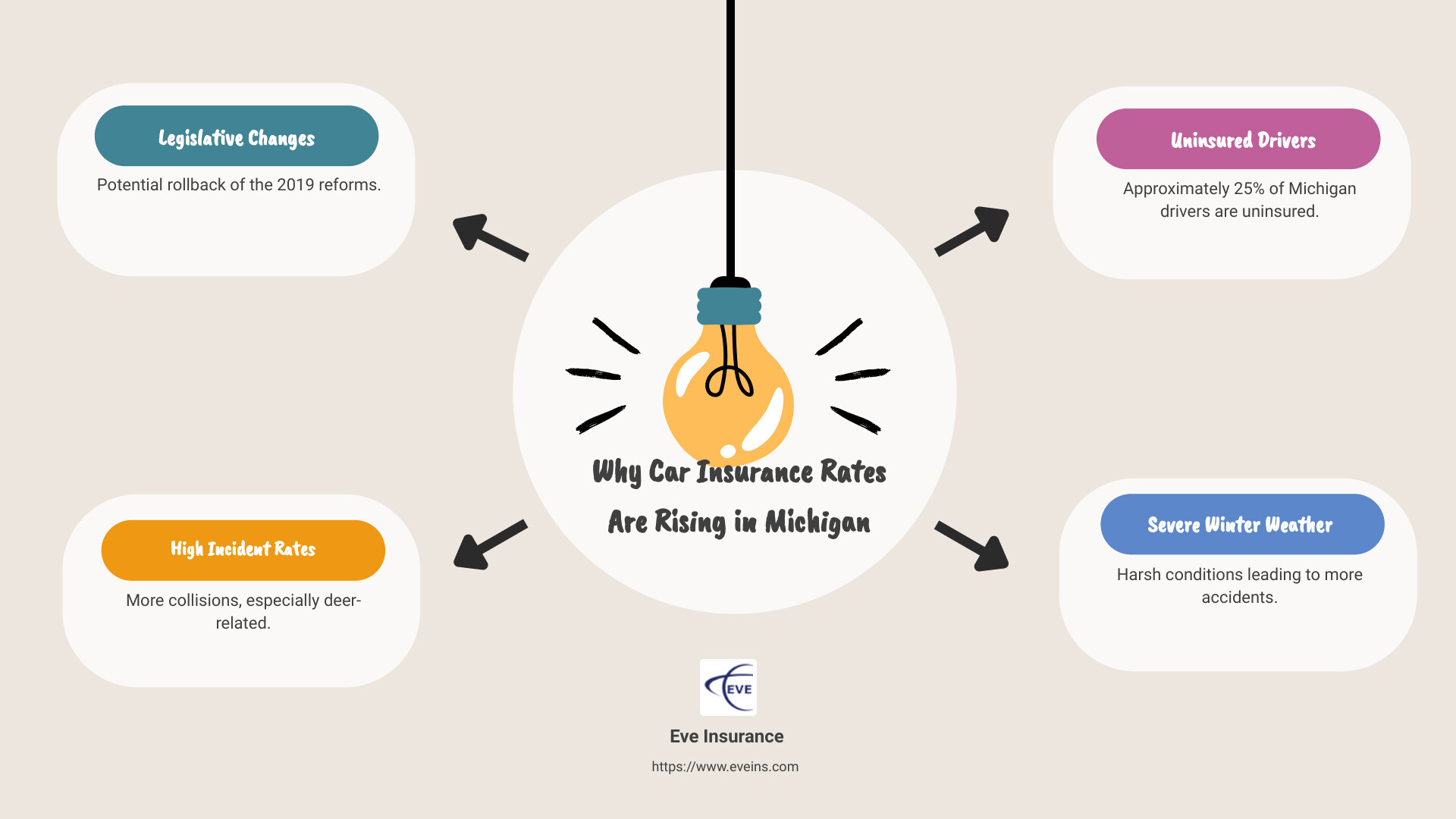
If you’re wondering why car insurance went up in Michigan, here’s a quick rundown:
- Legislative Changes: The potential rollback of the 2019 reforms.
- High Incident Rates: More collisions, especially deer-related.
- Uninsured Drivers: Around 25% of Michigan drivers are uninsured.
- Severe Winter Weather: Harsh conditions lead to more accidents.
Michigan drivers have faced challenges with car insurance for years. Along with the highest average rates in the nation, recent trends indicate a rise in premiums driven by several factors. Legislative changes, increased collision rates, and severe winter conditions are all key contributors.
The upcoming legislation might reverse some cost-saving measures introduced by the 2019 reforms, potentially leading to further premium hikes. Add to that the high number of deer-car collisions and the large percentage of uninsured drivers in the state, and you’ve got a recipe for rising insurance costs.
I’m Greg Eve, and as someone immersed in insurance, these issues are close to my heart. With years of experience, I’ve seen why car insurance is rising in Michigan and am here to guide you through it.
The Impact of Michigan’s No-Fault Insurance Law
Changes in PIP Coverage Options
Michigan’s No-Fault insurance law plays a huge role in why car insurance rates are so high in the state. Introduced in 1973, this law requires every driver to carry personal injury protection (PIP) benefits. The idea was to reduce litigation by having each driver’s own insurance cover their injuries and damages, regardless of who caused the accident.
One unique aspect of Michigan’s No-Fault insurance is the unlimited PIP benefits. This means that if you get into an accident, your insurance will cover all your medical expenses, rehabilitation costs, and even lost wages, no matter the amount. While this provides excellent coverage, it also makes insurance more expensive.
2019 Reform: A Double-Edged Sword
In 2019, Michigan reformed its No-Fault insurance law to help lower these high costs. The reform allowed drivers to choose different levels of PIP coverage, ranging from unlimited benefits to as low as $50,000. You can even opt out of PIP coverage entirely if you meet certain conditions, like having other health insurance that covers car accident injuries.
Table: PIP Coverage Options and Costs
| PIP Coverage Level | Annual Cost Impact |
|---|---|
| Unlimited | Highest |
| $500,000 | Lower |
| $250,000 | Even Lower |
| $50,000 | Lowest |
| Opt-Out | No Cost |
While these options can lower your premiums, they come with risks. Medical costs are skyrocketing, and even minor injuries can lead to big bills. Choosing lower PIP coverage might save you money upfront, but you could end up paying much more out-of-pocket if you’re in a serious accident.
Financial Risks of Lower PIP Coverage
Opting for less coverage can be tempting, especially when trying to save money. However, this can be a financial gamble. For example, if you choose the $50,000 PIP limit and your medical bills exceed that amount, you’ll have to cover the rest yourself. Given the high cost of medical care today, even a short hospital stay can rack up bills far exceeding $50,000.
Quote:
“With medical costs continuing to rise significantly, even seemingly minor injuries could get you into deep financial difficulties if you don’t have adequate insurance coverage,” warns MarketWatch.
Litigation Reduction and Medical Costs
The original goal of the No-Fault system was to reduce the number of lawsuits by making sure everyone’s insurance covered their own costs. This has indeed reduced litigation, but it hasn’t been enough to offset the high cost of medical care. Unlimited PIP benefits mean that insurance companies have to pay out large sums, driving up premiums for everyone.
In summary, while Michigan’s No-Fault insurance law provides excellent coverage, it also contributes significantly to the state’s high car insurance rates. The 2019 reforms have given drivers more options to lower their premiums, but these come with financial risks that need careful consideration.
Next, we’ll dive into how inflation and rising costs are further impacting your car insurance rates in Michigan.
Inflation and Rising Costs
Auto Parts and Repair Costs
Inflation has a big impact on the cost of car insurance in Michigan. One major factor is the rising price of auto parts. Stephan Crewdson from J.D. Power explains that the cost of parts has gone up significantly, making repairs more expensive. This increase in repair costs means insurance companies have to pay out more when a claim is made, which in turn drives up premiums.
For example, the price of a simple car part, like a bumper, has increased by 10% over the past year. When you multiply that by the number of claims insurers handle, the costs add up quickly. This is why you might see your insurance premium going up even if you haven’t had an accident.

Inflation’s Broader Impact
The broader impact of inflation can’t be ignored either. Inflation affects not just car parts, but almost everything we buy. This includes consumer goods, which have seen price hikes across the board. When the cost of living goes up, so does the cost of doing business. Insurance companies are no exception.
Higher costs for goods and services mean that when an insurance claim is made, the settlement amounts are higher. This is because everything from medical bills to car repairs costs more. According to J.D. Power, this has been one of the main reasons for the recent spike in car insurance rates.
Economic Factors
Economic factors also play a role. When the economy is strong, more people buy cars, which can lead to more accidents and more claims. Higher employment rates mean more cars on the road, increasing the likelihood of collisions. All these factors contribute to higher insurance premiums.
In summary, inflation and rising costs are significant contributors to the question, “Why did car insurance go up in Michigan?” From auto parts prices to broader economic factors, these elements combine to make car insurance more expensive for everyone.
Next, we’ll explore how Michigan’s high number of deer-car accidents further impacts insurance rates.
Michigan’s High Number of Deer-Car Accidents
Statistics and Rankings
Every year, Michigan drivers face around 50,000 deer-car collisions. This staggering number places Michigan among the top four states in the U.S. for such accidents. Specifically, Oakland County ranks second in the state for these incidents.
Why is this a big deal? Deer-car accidents often result in costly repairs. Even if the deer walks away unscathed, your car might not be so lucky. According to the Insurance Institute for Highway Safety, from 1975 to the mid-2000s, deaths from animal collisions increased, though they’ve leveled off recently. In 2021, there were 164 deaths from animal collisions, mostly occurring between October and December.
Repair Costs and Insurance Premiums
Deer-car collisions can lead to significant repair costs. Fixing a car that has hit a deer can easily run into thousands of dollars. These costs are borne by insurance companies, which then pass them onto policyholders in the form of higher premiums.
A State Farm report noted that U.S. drivers had an estimated 1.8 million animal collision claims between July 2022 and June 2023. Michigan drivers face a 1 in 60 chance of hitting a deer, making it one of the top states for such accidents.
Top States for Deer-Car Accidents
Here’s how Michigan stacks up against other states:
| Rank | State | 2023 Odds |
|---|---|---|
| 1 | West Virginia | 1 in 38 |
| 2 | Montana | 1 in 53 |
| 3 | Pennsylvania | 1 in 59 |
| 4 | Michigan | 1 in 60 |
| 4 | Wisconsin | 1 in 60 |
Annual Collision Numbers
Michigan’s high number of deer-car collisions is not just a seasonal issue. During deer season, which runs from October to December, the movement of deer increases, leading to more accidents. According to Insurance Information Institute, these collisions are a significant contributor to the high insurance premiums in the state.
Next, we’ll delve into how the role of uninsured drivers affects insurance rates in Michigan.
The Role of Uninsured Drivers
Consequences of Uninsured Drivers
In Michigan, nearly 1 in 4 drivers are uninsured. This is a big problem for everyone on the road. Even though state law requires all drivers to have car insurance, many people still don’t buy it. This creates a financial burden for those who do follow the law.
When uninsured drivers cause accidents, insurance companies have to cover the costs. They do this by increasing premiums for everyone else. This is called cost shifting. Essentially, responsible drivers end up paying more to make up for those who don’t buy insurance.
UM and UIM Coverage
To protect yourself from uninsured drivers, it’s a good idea to get Uninsured Motorist (UM) and Underinsured Motorist (UIM) coverage. These options help cover costs if you’re in an accident with someone who doesn’t have enough insurance or any at all.
UM and UIM coverage can pay for:
- Medical bills
- Pain and suffering
- Lost wages
- Car repairs
Without this coverage, you could be stuck paying out-of-pocket for these expenses.
Premium Increases
The high number of uninsured drivers is a key reason why car insurance rates are going up in Michigan. As more people drive without insurance, the risk for insurance companies increases. They pass this risk on to policyholders in the form of higher premiums.
According to Insurance Research Council, Michigan has one of the highest rates of uninsured drivers in the country, with nearly 19.6% of drivers uninsured. This significantly impacts the cost of insurance for everyone else.
Financial Protection
Having adequate insurance, including UM and UIM coverage, is crucial for financial protection. It ensures that you’re not left in a financial bind if you’re involved in an accident with an uninsured driver.
Insurance Recommendations:
- Check Your Coverage: Make sure you have UM and UIM coverage.
- Drive Safely: Avoid accidents by following traffic laws and driving carefully.
- Shop Around: Compare rates from different insurance companies to find the best deal.
- Ask About Discounts: Many insurers offer discounts for safe driving records, bundling policies, or paying premiums in full.
By taking these steps, you can better protect yourself and potentially lower your insurance costs.
Next, we’ll look at how Michigan’s severe winter weather impacts car insurance rates.
Michigan’s Severe Winter Weather
Michigan’s winter weather is notorious. In fact, in 2023, Michigan was named the worst state for winter driving conditions. Lake-effect snow, black ice, and poorly maintained roads make driving hazardous and increase accident rates.
Safety Tips for Winter Driving
- Lake-Effect Snow: This type of snow is especially dangerous because it can create heavy snowfalls in localized areas. Always check the weather forecast before heading out.
- Black Ice: Black ice is a thin layer of ice on the road that is nearly invisible. Drive slowly and avoid sudden movements like sharp turns or hard braking.
- Accident Rates: Winter months see a spike in accidents due to these challenging conditions. Always be extra cautious.
- Wiper Fluid: Make sure your wiper fluid is full and rated for cold temperatures. This helps keep your windshield clear of snow and ice.
- Tire Treads: Check your tire treads regularly. Worn tires can be extremely dangerous on icy roads. Consider investing in snow tires for better traction.
- Car Seats: Ensure your kids are secured in car seats as required by law. Properly installed car seats can save lives in the event of an accident.
- Seat Belts: Buckle up! Wearing a seat belt is not just the law; it’s your best defense against injury in a crash.
- Snow Tires: Snow tires provide better traction on snow and ice. They can make a significant difference in your vehicle’s handling during winter.
By following these tips, you can reduce your risk of becoming a statistic in Michigan’s harsh winter driving conditions.
Next, let’s explore why car insurance rates have gone up in Michigan.
Why Did Car Insurance Go Up in Michigan?
Recent Rate Increases
Car insurance rates in Michigan have been climbing steadily. From 2022 to 2024, many drivers have seen their premiums skyrocket. According to a Bankrate report, Michigan drivers faced a 26% increase in auto insurance premiums in recent years. The Consumer Federation of America also highlighted that inflation and rising claim costs are major contributors to these hikes.
Michigan Catastrophic Claims Association (MCAA) Fees
A significant factor in the rising costs is the MCAA fee increase. Starting July 1, 2023, drivers with unlimited Personal Injury Protection (PIP) coverage must pay $122 per vehicle, up from $86 last year. This fee hike addresses a $3.7 billion deficit in the MCAA fund, which reimburses insurance companies for medical costs exceeding $600,000 per claim. The deficit was partly caused by a recent court ruling that required the state to cover lifetime medical costs for crash victims injured before the 2019 insurance reform.
Inflation and Rising Costs
Inflation has impacted almost every sector, including auto insurance. The cost of auto parts and repairs has risen sharply. For instance, the price of motor vehicle parts and equipment increased by 2.1% in 2018 alone. Higher repair costs translate to higher insurance claims, which insurers pass on to policyholders.
The Role of Uninsured Drivers
Michigan has a high number of uninsured drivers—about one in four. This increases costs for insured drivers, as insurers need to cover the financial gap left by uninsured motorists. This cost-shifting leads to higher premiums for everyone. The state law requires drivers to have insurance, but the high rates make it difficult for some to comply, creating a vicious cycle.
Michigan’s Severe Winter Weather
Michigan’s harsh winter weather also contributes to higher insurance rates. Lake-effect snow, black ice, and poor road conditions lead to more accidents. These accidents result in more claims, which drive up insurance costs. In 2023, Michigan was named the worst state for winter driving conditions, further exacerbating the issue.
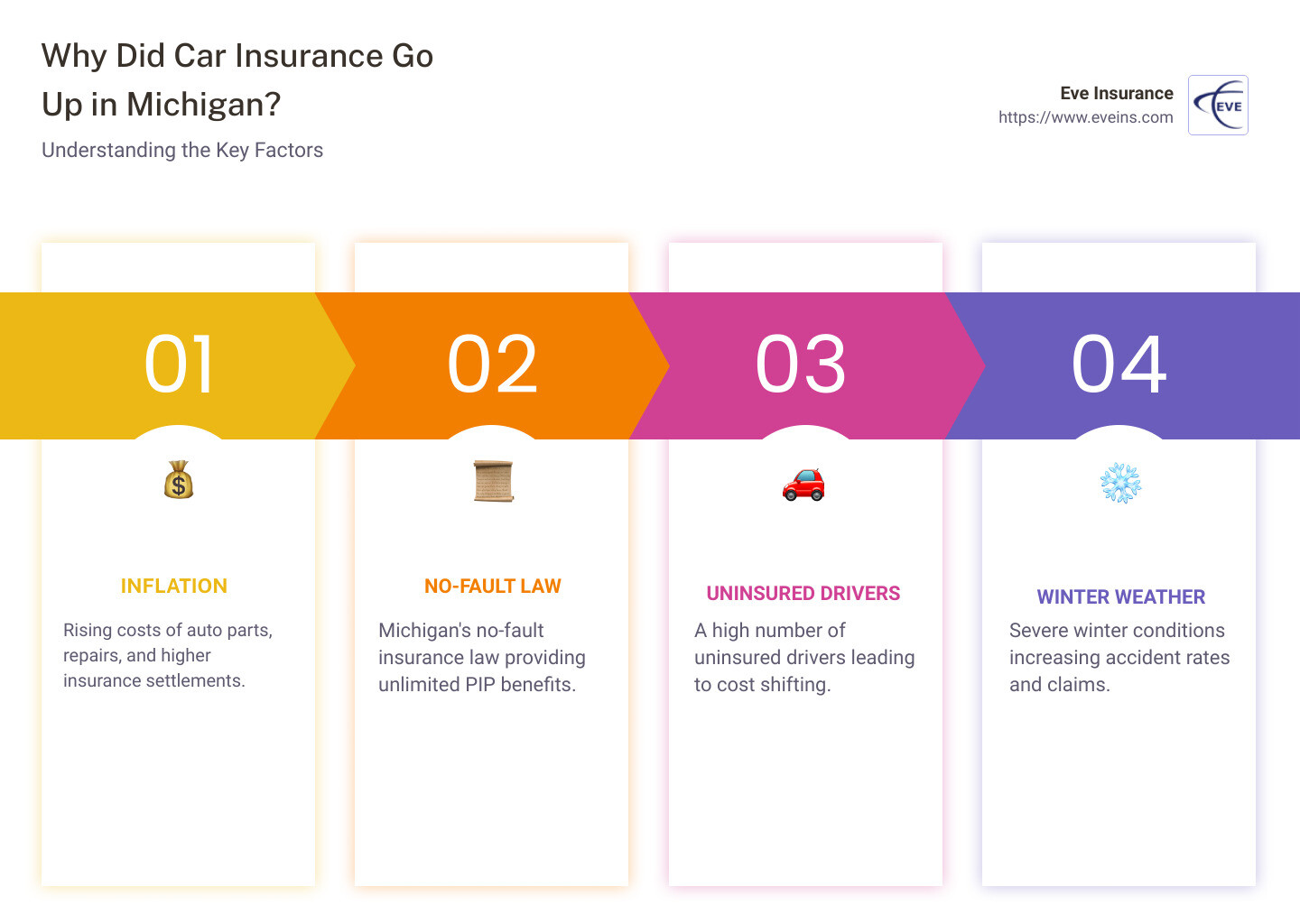
In summary, the combination of inflation, changes in the no-fault law, a high number of uninsured drivers, and severe winter weather has contributed to the recent spike in Michigan car insurance rates. Next, we’ll dive into some frequently asked questions about Michigan car insurance rates.
Frequently Asked Questions about Michigan Car Insurance Rates
Why has Michigan auto insurance gone up?
There are several reasons why car insurance rates have increased in Michigan:
Inflation: Inflation affects the cost of everything, including car repairs and medical bills. As the prices for these services rise, so do insurance premiums. According to J.D. Power, inflation has driven up the cost of claims, making it more expensive for insurers to cover accidents.
Claim Costs: The cost of claims has been rising due to more expensive auto parts and higher medical expenses. The Consumer Federation found that Michigan drivers paid an average of $2,133 annually for car insurance in 2022, down from $2,611 in 2019. However, with rising claim costs, this trend may reverse.
Economic Factors: Other economic factors, such as increased driving due to lower unemployment rates, also contribute to higher insurance premiums. More driving means more accidents and claims, leading to higher costs for insurers.
Why is car insurance so expensive all of a sudden?
Car insurance has become more expensive due to a combination of increased risks and economic pressures:
Risk Increase: Higher accident rates and more severe weather conditions increase the risk for insurers. For example, Michigan has a high number of deer-car collisions and severe winter weather, both of which lead to more claims.
Extreme Weather: Michigan’s severe winter weather, including lake-effect snow and black ice, results in more accidents. In 2023, the state was named the worst for winter driving conditions, leading to more claims and higher premiums.
Accident Rates: Higher accident rates mean more claims, which drive up insurance costs. The number of accidents has risen since 2020, contributing to the increase in premiums.
Are auto insurance premiums going up in 2024?
Yes, auto insurance premiums are expected to continue rising in 2024:
Bankrate Report: According to a Bankrate report, Michigan experienced the highest rate increase in the nation. The report found that premiums increased by 26% from 2022 to 2024.
J.D. Power Insights: J.D. Power also noted that inflation and higher claim costs are driving up premiums. They have not seen such significant increases in 30 years.
Michigan Catastrophic Claims Association (MCAA) Fees: The MCAA fee increase is another factor contributing to higher premiums. The association has a $3.7 billion deficit, and recent court rulings may impact future costs.
In summary, a combination of inflation, rising claim costs, economic factors, increased risk, and extreme weather conditions are driving up car insurance premiums in Michigan. These factors are expected to continue influencing rates in 2024 and beyond.
Conclusion
Michigan car insurance rates are skyrocketing due to a mix of factors, including inflation, changes to the no-fault insurance law, a high number of uninsured drivers, and severe winter weather. These elements combined have created a perfect storm, making it difficult for drivers to keep their premiums affordable.
Eve Insurance is here to help. We understand the challenges Michigan drivers face and are committed to offering solutions that can help you save money on your car insurance.
Cost-Saving Tips
- Shop Around: Always compare rates from multiple insurers. Prices and coverage options can vary significantly.
- Increase Your Deductible: Opting for a higher deductible can lower your premiums. Just make sure you can afford the deductible if you need to file a claim.
- Verify Your Information: Ensure that all your personal information is up-to-date. Changes in your commute or vehicle usage can impact your rates.
- Utilize Discounts: Ask about discounts for safe driving, bundling policies, or even installing electronic tracking devices in your car.
- Consider Your Vehicle: Driving a car that’s cheaper to insure can also reduce your premiums. Avoid vehicles that are popular targets for theft or have high repair costs.
For more personalized advice and to explore your options, visit our Auto Insurance page.
Future Outlook
While the current trends indicate that car insurance rates in Michigan will remain high, staying informed and proactive can help you manage these costs. By understanding the factors at play and taking advantage of available savings opportunities, you can better navigate the complex landscape of auto insurance.
We at Eve Insurance are here to support you with expert advice and competitive rates. Contact us today to find out how we can help you protect your vehicle and your wallet.