Understanding Universal Life Insurance: Key Benefits and Drawbacks

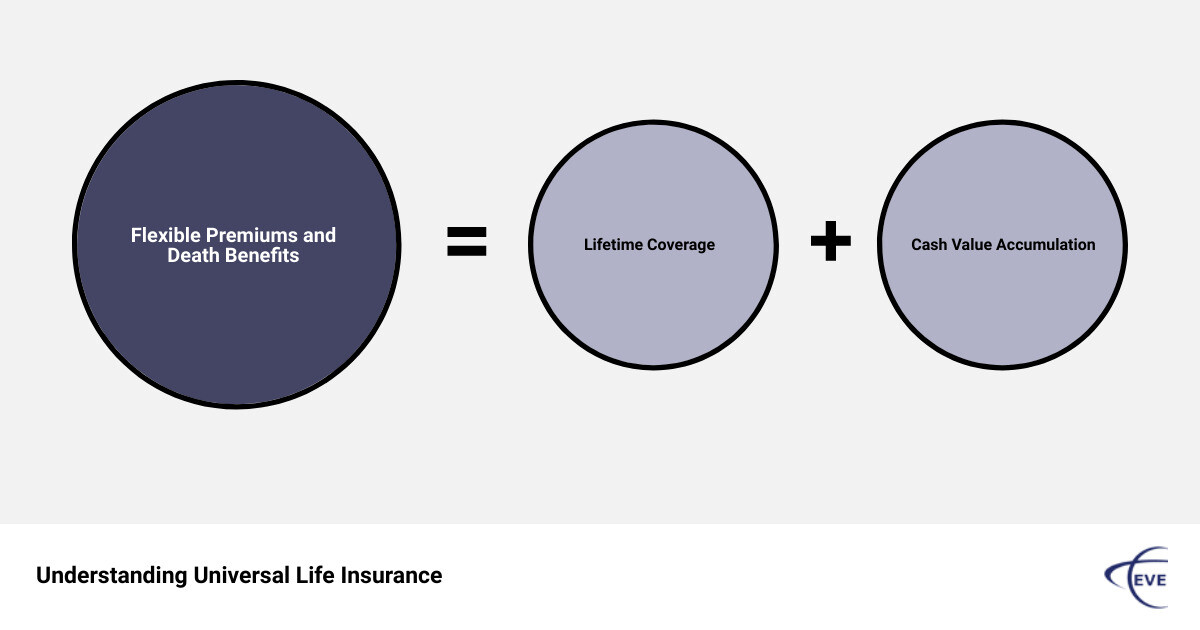
What is universal life insurance? Universal life insurance is a type of permanent life insurance that provides lifetime coverage and includes a cash value component. It offers flexibility in premium payments and death benefits, allowing policyholders to adjust them within certain limits. Unlike term life insurance, which expires after a specific period, universal life insurance is designed to last as long as the policyholder keeps up with the required payments.
Quick Facts:
- Lifetime Coverage: As long as premiums are paid, coverage lasts for life.
- Cash Value Accumulation: The policy builds cash value over time, which can be accessed through loans or withdrawals.
- Flexible Premiums and Death Benefits: Adjust premiums and death benefits within limits to suit financial needs.
- Tax-Deferred Growth: Cash value grows on a tax-deferred basis.
I’m Greg Eve. A client once called us “Dream Protectors.” With decades of experience in insurance, I’ve helped many secure their financial futures. Let’s explore the details of universal life insurance.
What is Universal Life Insurance?
Universal life insurance is a type of permanent life insurance that provides lifelong coverage and includes a cash value component. This means the policy remains active as long as you pay your premiums. Unlike term life insurance, which only covers you for a specific period, universal life insurance can last your entire life.
How Does Universal Life Insurance Work?
Universal life insurance offers flexible premiums and an adjustable death benefit. Here’s a breakdown of how it works:
- Adjustable Premiums: You can adjust your premium payments within certain limits. If you pay more than the minimum required, the excess goes into your policy’s cash value. If you need to pay less, you can do so, provided there is enough cash value to cover the policy’s costs.
- Cost of Insurance (COI): This is the minimum premium required to keep the policy active. It covers mortality charges, policy administration, and other expenses. The COI will increase as you age, but your accumulated cash value can help offset these costs.
- Cash Value Accumulation: Part of your premium payments goes into a savings component, known as the cash value. This amount earns interest at a rate set by the insurer, which can change but usually has a minimum guaranteed rate. Over time, this cash value can grow and be accessed through loans or withdrawals.
- Interest Rates: The interest rate on the cash value can fluctuate based on market conditions but is often subject to a minimum rate. This helps ensure some level of growth even in poor market conditions.
- Policy Lapse: If your investments underperform or you underpay premiums for too long, your policy may lapse. This means you could lose your coverage and any accumulated cash value.
Types of Universal Life Insurance
There are several types of universal life insurance policies, each with unique features:
- Guaranteed Universal Life (GUL):
- Fixed Premiums: Premiums and death benefits remain the same for the life of the policy.
- Minimal Cash Value: Often has little to no cash value accumulation.
- Indexed Universal Life (IUL):
- Interest Linked to Index: Cash value growth is tied to the performance of an index like the S&P 500.
- Participation Rates and Caps: There are limits on how much you can earn, even in a good market.
- Variable Universal Life (VUL):
- Investment Options: Cash value can be invested in stocks, bonds, and mutual funds.
- Higher Risk: Requires active management and comes with the risk of losing cash value if investments perform poorly.
- Cash Accumulation Universal Life (CAUL):
- Focus on Savings: Designed to build significant cash value over time.
- Flexible Premiums: Offers more flexibility in premium payments compared to other types.
- Current Assumption Universal Life (CAUL):
- Interest Based on Current Rates: Premiums and cash value growth are based on current interest rates.
- Adjustable Features: Allows for adjustments in premiums and death benefits based on current assumptions.
Universal life insurance provides a blend of flexibility and investment opportunities, making it a versatile choice for those looking to secure their financial future. However, understand the different types and how they work to choose the best policy for your needs.
Benefits of Universal Life Insurance
Flexible Premiums
One of the standout features of universal life insurance is its flexible premiums. Unlike whole life insurance, which requires fixed payments, universal life allows you to adjust your premiums.
- Adjustable Payments: You can pay more than the minimum required premium, known as the Cost of Insurance (COI). Any excess premium goes into the policy’s cash value and earns interest.
- Skipping Payments: If your cash value is sufficient, you can even lower or skip payments without risking a policy lapse. This can be incredibly useful during financial hardships.
Potential Cash Value Growth
Universal life insurance policies also offer the potential for cash value growth, which can act like a savings account over time.
- Market Interest Rates: The cash value earns interest based on current market rates or the policy’s minimum interest rate, whichever is higher. This means your cash value could grow more quickly in a favorable economic climate.
- Minimum Interest Rate: There is usually a guaranteed minimum interest rate, providing a safety net against poor market performance.
- Partial Withdrawals and Loans: You can make partial withdrawals or take out loans against your cash value. This can be a great way to access funds without having to go through a credit check. However, any unpaid loans will reduce your death benefit.
Policy Loans
Another significant benefit is the ability to take out policy loans.
- No Tax Implications: Borrowing against your cash value generally has no tax implications, making it a tax-efficient way to access funds.
- Lower Interest Rates: The interest rates on these loans are often lower than those for personal loans, and you don’t need to undergo a credit check.
- Impact on Death Benefit: Be aware that unpaid loans will reduce the death benefit by the outstanding amount, which could affect your beneficiaries.
Adjustable Death Benefit
Flexibility extends to the death benefit as well.
- Increase or Decrease: You can increase the size of your death benefit, although this may require a medical exam. Conversely, you can lower your death benefit to reduce your premiums.
- Two Types of Death Benefits: You can choose between a level death benefit (fixed amount) or an increasing death benefit (cash value added to the death benefit). The latter option comes with higher premiums but offers greater financial security for your beneficiaries.
Universal life insurance offers a unique blend of flexible premiums, potential cash value growth, and policy loans, making it an attractive option for those looking to tailor their financial protection.
Drawbacks of Universal Life Insurance
While universal life insurance offers flexibility and potential cash value growth, it’s not without its drawbacks. Let’s dive into some of the key concerns.
Risk of Large Payment Requirements or Policy Lapse
One of the biggest risks with universal life insurance is large payment requirements or even a policy lapse.
Universal life policies require careful monitoring of the cash value. If the cash value falls to zero and your premiums don’t cover the cost of insurance, your policy could lapse. This means you’d lose your coverage unless you make a significant payment to keep the policy active.
For example, if your cash value can’t cover the cost of insurance due to market fluctuations or insufficient premium payments, you might face unexpectedly large premium payments to keep the policy in force.
Non-Guaranteed Returns
Another drawback is the non-guaranteed returns on your cash value. Unlike whole life insurance, universal life policies do not offer a guaranteed interest rate. Instead, the interest rate is set by the insurer and can change frequently.
If interest rates drop, your cash value may not perform well. However, most universal life policies do come with a minimum rate protection to limit your losses. Still, the investment performance can be uncertain and may affect your premiums and cash value growth.
Taxable Withdrawals
When you withdraw from your policy’s cash value, some of those withdrawals can be taxable. Life insurance generally follows a first in, first out (FIFO) method for taxation. This means you receive your investment in the policy first, and any gains are taxed.
If you withdraw more than you’ve paid into the policy, those withdrawals will be considered taxable gains. This can be a surprise for policyholders who aren’t aware of the tax implications.
Cash Value Lost at Policyholder’s Death
One of the lesser-known drawbacks is that cash value is lost at the policyholder’s death. When you pass away, the insurance company keeps the account’s cash value. Your beneficiaries will receive just the death benefit, not the cash value you’ve accumulated.
Some policies allow you to increase the death benefit as you build the cash value, but this usually comes with higher premiums. Otherwise, the cash value retention by the insurer means that your beneficiaries get the death benefit only.
Understanding these drawbacks is crucial for making an informed decision about whether universal life insurance is right for you. Next, we’ll compare universal life insurance with other types of life insurance to help you weigh your options.
Universal Life Insurance vs. Other Life Insurance Types
Universal Life vs. Term Life
Term Life Insurance is straightforward. It covers you for a specific period, like 10, 20, or 30 years. If you pass away during this term, your beneficiaries get a payout. Term life is usually cheaper than permanent types of insurance, making it attractive for younger people or those on a budget.
Universal Life Insurance, on the other hand, is a type of permanent life insurance. It lasts your whole life, as long as you keep up with the premiums. It also has a cash savings component that grows over time. You can borrow against this cash value or even withdraw it, but be careful—doing so might reduce the death benefit or cause the policy to lapse if not managed well.
Cost Comparison: Term life is generally more affordable. For example, a 30-year-old might pay $20 a month for term life but could pay $100 a month for universal life. The higher cost of universal life comes from its permanent nature and the cash savings component.
Flexibility Comparison: Universal life is more flexible. You can adjust your premiums and death benefit as your needs change. Term life is simpler but rigid—once you choose your term and coverage amount, you can’t change it without getting a new policy.
Universal Life vs. Whole Life
Whole Life Insurance is another type of permanent insurance. It offers fixed premiums, which means you pay the same amount for as long as you hold the policy. It also guarantees a minimum cash value growth, making it a stable but often more expensive option.
Universal Life Insurance offers more flexibility but with some trade-offs. You can adjust your premiums and death benefit, which can be helpful if your financial situation changes. However, the cash value growth is not guaranteed and depends on market interest rates. This means your returns could be higher, but they could also be lower.
Cost Comparison: Whole life is typically more expensive because it offers fixed premiums and guaranteed cash value growth. Universal life can start cheaper but may become more expensive if the cash value doesn’t grow as expected.
Flexibility Comparison: Universal life wins in flexibility. You can increase or decrease your premiums and death benefit, making it adaptable to your changing needs. Whole life is less flexible but offers more stability with its fixed premiums and guaranteed returns.
Permanent Coverage: Both whole life and universal life provide lifelong coverage, unlike term life, which only covers you for a set period.
Cash Savings Component: Both types have a cash savings component, but the way it grows is different. Whole life offers a guaranteed growth rate, while universal life’s growth depends on market interest rates.
Death Benefit: Both offer a death benefit, but universal life allows you to adjust it. With whole life, the death benefit is fixed unless you buy additional coverage.
Now that we’ve compared universal life insurance with other types of life insurance, you should have a clearer idea of which might suit your needs best. Next, let’s dive into some frequently asked questions about universal life insurance to address any lingering doubts you might have.
Frequently Asked Questions about Universal Life Insurance
What is the biggest disadvantage of universal life insurance?
A major downside of universal life insurance is the need to monitor the cash value closely. If you don’t, your policy could become underfunded. This means you’ll have to make large payments to keep it active. For instance, imagine you miss monitoring your cash value for a few years, and suddenly you need to pay a hefty sum to avoid a policy lapse.
Another risk is related to interest rate fluctuations. When interest rates drop, your cash value may not grow as much as you had hoped. However, most policies have a minimum interest rate, which provides some protection.
Can I cash out my universal life insurance policy?
Yes, you can cash out your universal life insurance policy. There are two main ways to do this:
- Policy Surrender: You can cancel the policy and liquidate the cash value. Be aware that this might come with a surrender fee if you haven’t passed the surrender period. For example, if you surrender your policy within the first few years, the fee could be substantial.
- Selling the Policy: You can also sell your policy to a third party. This might be a better option if the surrender fee is too high.
What happens to cash value in a universal life policy at death?
When the policyholder dies, the insurer retains the cash value. The beneficiaries receive the death benefit payout, but not the accumulated cash value. For example, if your policy has a death benefit of $200,000 and a cash value of $50,000, your beneficiaries will only get the $200,000.
Some policies offer different options like an increasing death benefit, where the cash value is added to the death benefit. However, this usually comes with higher premiums.
Now that we’ve tackled some of the most common questions about universal life insurance, you should have a better understanding of its benefits and drawbacks.
Conclusion
In summary, universal life insurance offers a blend of lifelong coverage, flexible premiums, and potential cash value growth. It’s a versatile option for those who want more control over their life insurance policy. However, it’s important to be aware of the potential drawbacks, such as large payment requirements and non-guaranteed returns.
At Eve Insurance, we understand that choosing the right life insurance policy can be a daunting task. That’s why we offer tailored solutions to fit your unique needs. Whether you’re looking for flexible premiums, potential investment growth, or a combination of both, our team is here to guide you every step of the way.
We are deeply committed to our community and believe in providing peace of mind through comprehensive and personalized insurance plans. By choosing Eve Insurance, you’re not just getting a policy; you’re gaining a partner who cares about your financial well-being and future security.
For more information on how we can help you secure the right life insurance policy, visit our life insurance service page.
Thank you for taking the time to learn more about universal life insurance. We hope this guide has been helpful and informative. If you have any more questions or need personalized advice, don’t hesitate to reach out to us. We’re here to help you make the best decision for your future.