Understanding Cash Value Life Insurance
What is cash value life insurance? It is a type of permanent life insurance that includes a savings component along with a death benefit. This savings, or “cash value,” grows tax-deferred, and can be accessed in various ways, providing financial flexibility.
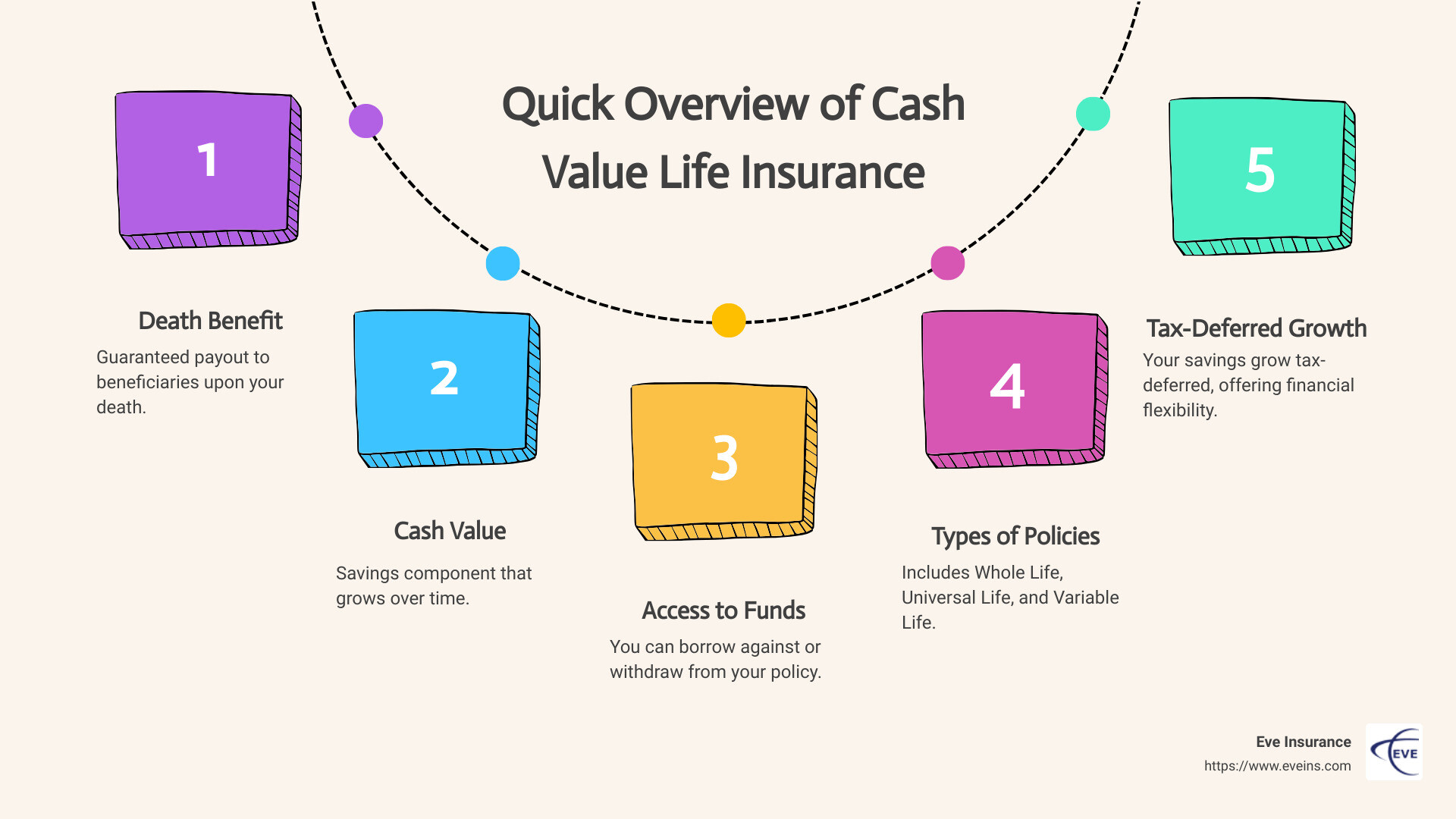
Here’s a quick overview:
- Death Benefit: Guaranteed payout to beneficiaries upon your death.
- Cash Value: Savings component that grows over time.
- Access to Funds: You can borrow against or withdraw from your policy.
- Types of Policies: Includes Whole Life, Universal Life, and Variable Life.
I’m Greg Eve, and I’ve helped countless families understand their life insurance options. With my experience in guiding people through the nuances of cash value life insurance, I aim to simplify the complexities and offer clear, reliable advice. Let’s explore how cash value life insurance works and why it might be the right choice for you and your family.
What is Cash Value Life Insurance?
Cash value life insurance is a type of permanent life insurance that includes a savings component. Unlike term life insurance, which only provides coverage for a specific period, cash value life insurance covers you for your entire life. This means that as long as you pay your premiums, your beneficiaries will receive a death benefit when you pass away.
Permanent Life Insurance
Permanent life insurance refers to any life insurance policy that does not expire, as long as premiums are paid. This includes whole life, universal life, and variable life insurance. Each of these policies offers a cash value component, which is essentially a savings account that builds over time.
Savings Component
The savings component of cash value life insurance allows you to build equity within your policy. A portion of your premium goes into this savings account, which grows tax-deferred. This means you won’t pay taxes on the earnings until you withdraw the money. The cash value can be used in various ways, such as borrowing against it, withdrawing funds, or even paying your premiums.
Death Benefit
The death benefit is the amount of money your beneficiaries will receive when you pass away. This is the primary purpose of any life insurance policy. However, with cash value life insurance, the death benefit can be affected by any withdrawals or loans you take from the cash value.
Whole Life Insurance
Whole life insurance is one of the most straightforward types of cash value life insurance. It offers:
- Steady Growth: The cash value grows at a fixed interest rate.
- Guaranteed Cash Value: You can always count on a minimum value.
- Fixed Premiums: Your premiums remain the same throughout the life of the policy.

Universal Life Insurance
Universal life insurance offers more flexibility compared to whole life insurance. It includes:
- Flexible Premiums: You can adjust your premium payments, as long as there’s enough money in the cash value to cover the cost of insurance.
- Adjustable Death Benefit: You can increase or decrease the death benefit as your needs change.
- Guaranteed Minimum Interest Rate: Your cash value will grow at least at a guaranteed rate, but it may earn more if the insurer’s investments perform well.
Variable Life Insurance
Variable life insurance combines death protection with investment options. Features include:
- Investment Options: You can choose how to invest the cash value, such as in stocks, bonds, or mutual funds.
- Market Performance: The cash value and death benefit can vary based on the performance of your chosen investments.
- Higher Risk, Potential Growth: This type of policy offers higher potential returns but also comes with higher risks.
Indexed Universal Life Insurance
Indexed universal life insurance (IUL) links your cash value growth to a stock market index, like the S&P 500. It offers:
- Stock Market Index: Your cash value grows based on the performance of a specific index.
- Guaranteed Minimum Interest Rate: Even if the market performs poorly, your cash value will still grow at a minimum rate.
- Performance-Based Growth: The better the market performs, the more your cash value will grow.

Cash value life insurance offers a unique blend of lifelong coverage and savings growth, making it a versatile option for many people. Whether you choose whole life, universal life, variable life, or indexed universal life, each type provides different benefits and levels of flexibility to suit your needs.
How Does Cash Value Life Insurance Work?
Cash value life insurance is a type of permanent life insurance that not only provides a death benefit but also includes a savings component. This savings component, known as the cash value, grows over time based on the type of policy you choose.
Whole Life Insurance
Whole life insurance is straightforward and predictable.
- Premium Payments: You pay a fixed premium for the entire duration of the policy. This means your payments won’t increase as you age.
- Cash Value Accumulation: A portion of your premium goes into a cash value account. This account grows at a fixed interest rate set by the insurance company.
- Guaranteed Cash Value: The cash value growth is guaranteed, so you know exactly how much it will grow each year.
- Fixed Interest Rate: The interest rate is determined by the insurer and does not change, providing steady growth.
Universal Life Insurance
Universal life insurance offers more flexibility compared to whole life insurance.
- Flexible Premiums: You can adjust your premium payments within certain limits. This means you can pay more when you have extra money or less when you’re financially tight.
- Adjustable Death Benefit: You can also change the death benefit amount as your needs change.
- Guaranteed Minimum Interest Rate: The policy comes with a minimum interest rate, ensuring that your cash value will grow even if the insurer’s investments underperform.
- Investment Returns: If the insurer’s investments do well, your cash value can grow faster than the guaranteed minimum rate.
Variable Life Insurance
Variable life insurance combines life insurance with investment opportunities.
- Investment Options: You can choose to invest your cash value in various subaccounts, similar to mutual funds. These can include stocks, bonds, and other investments.
- Market Performance: The cash value and death benefit can fluctuate based on how well your chosen investments perform.
- Higher Risk, Potential Growth: This type of policy carries more risk but also offers the potential for higher returns. If the market does well, your cash value can grow significantly. However, poor market performance can reduce your cash value and death benefit.
Indexed Universal Life Insurance
Indexed universal life insurance links your cash value growth to a stock market index, like the S&P 500.
- Stock Market Index: Your cash value grows based on the performance of a specific stock market index.
- Guaranteed Minimum Interest Rate: Even if the market performs poorly, your cash value will still grow at a guaranteed minimum rate.
- Performance-Based Growth: The better the market performs, the more your cash value will grow. This provides a balance between risk and reward.
Understanding how each type of cash value life insurance works can help you choose the best policy for your needs. Whether you prefer the steady growth of whole life insurance or the investment potential of variable life insurance, there’s a policy that can meet your financial goals.
Benefits of Cash Value Life Insurance
Accessing Cash Value
One of the major benefits of cash value life insurance is the ability to access the cash value in various ways. This flexibility can provide financial security in times of need.
Policy Loans
You can take out a loan against your policy’s cash value. This is often easier than getting a loan from a bank and usually comes with a lower interest rate. However, if you don’t repay the loan, the amount will be deducted from your death benefit.
Withdrawals
You can also withdraw funds directly from your policy’s cash value. This can be useful for emergencies or large expenses, like paying for college tuition or medical bills. Though, that withdrawals will reduce your death benefit.
Surrendering the Policy
If you no longer need the insurance, you can surrender the policy and receive its cash value. This might be a good option if you need a large sum of money immediately. However, surrendering the policy will terminate your coverage.
Paying Premiums
You can use the cash value to pay your premiums. This can be particularly helpful during retirement when your income might be lower. By using the cash value to cover premiums, you can keep your policy in force without additional out-of-pocket expenses.
Tax Advantages
Cash value life insurance offers several tax advantages that can make it a smart financial tool.
Tax-Deferred Growth
The cash value in your policy grows tax-deferred. This means you don’t have to pay taxes on the interest, dividends, or capital gains as long as they remain in the policy. This allows your savings to grow faster over time.
Tax-Free Loans
Loans taken against your policy are generally tax-free. You can borrow money without having to worry about immediate tax consequences, making it a flexible financial resource.
Tax Implications
While there are many tax advantages, there are also some tax implications to consider. If you withdraw more than the amount you’ve paid in premiums, the excess will be subject to income tax. Additionally, if you surrender the policy, any gains will be taxed.
Lifelong Coverage and Financial Security
Cash value life insurance provides lifelong coverage, ensuring that your beneficiaries receive a death benefit no matter when you pass away. This offers peace of mind and financial security for your family.
Retirement Income
As you near retirement, the cash value in your policy can serve as an additional source of income. You can withdraw funds, take out loans, or use the cash value to pay premiums, helping to supplement your retirement savings.
In summary, cash value life insurance offers a range of benefits that can enhance your financial security and provide flexible access to funds. Whether you’re looking for lifelong coverage, tax advantages, or additional retirement income, this type of policy can be a valuable part of your financial plan.
Disadvantages of Cash Value Life Insurance
While cash value life insurance has its perks, it’s not without drawbacks. Here are some key disadvantages to keep in mind:
Higher Premiums
Cash value life insurance premiums are typically higher than those for term life insurance. This is because part of your payment goes toward building savings. For example, if you’re comparing a $500,000 term life policy with a whole life policy, the whole life premiums could be five to ten times higher.
Reduced Death Benefit
When you withdraw from your policy’s cash value, the death benefit decreases. If you withdraw everything, the policy terminates. This means less financial security for your beneficiaries.
Policy Complexity
Cash value life insurance policies can be complicated. They come with various options and features that can be confusing. For instance, understanding how your cash value grows, how loans affect your policy, and the tax implications can be overwhelming without professional advice.
Potential Surrender Charges
If you decide to cancel your policy, you might face surrender charges. These fees can be as high as 10% to 35% of your cash value. For example, if you have a cash value of $10,000 and a 10% surrender charge, you would only receive $9,000 upon cancellation.
In summary, while cash value life insurance offers benefits like lifelong coverage and tax advantages, it also comes with higher premiums, reduced death benefits, complexity, and potential surrender charges. Be sure to weigh these factors carefully before making a decision.
Frequently Asked Questions about Cash Value Life Insurance
How does cash value life insurance work?
Cash value life insurance is a type of permanent life insurance. It combines a death benefit with a savings component. When you pay your premiums, part of the money goes into a cash value account. This account grows over time, either at a fixed interest rate (for whole life policies) or based on market performance (for universal and variable life policies).
For example: If you have a whole life policy with a fixed interest rate of 4%, your cash value will grow at that rate each year. On the other hand, a universal life policy might grow based on the performance of a stock market index like the S&P 500.
What is the disadvantage of cash value life insurance?
While cash value life insurance offers many benefits, it also has some downsides:
- Higher Premiums: These policies are generally more expensive than term life insurance. The added cost goes towards the cash value component and the lifelong coverage.
- Reduced Death Benefit: If you withdraw from your cash value or take out a loan, it can reduce the death benefit your beneficiaries receive.
- Complexity: These policies can be complicated to understand and manage. They often come with various fees and charges, such as surrender charges, which can be as high as 10% to 35% of your cash value.
- Potential Surrender Charges: If you decide to cancel your policy early, you might face significant fees. For instance, if you have a cash value of $10,000 and a 10% surrender charge, you would only receive $9,000 upon cancellation.
Can I use my life insurance policy’s cash value while I’m still alive?
Yes, you can use the cash value of your life insurance policy while you’re still alive. Here are a few ways to do it:
- Policy Loans: You can borrow against the cash value. This allows you to access funds without canceling your policy. However, you will need to pay interest on the loan. If you don’t repay it, the amount will be deducted from your death benefit.
- Withdrawals: You can withdraw money from your cash value account. That this can reduce the death benefit your beneficiaries receive.
- Surrendering the Policy: You can cancel your policy and receive the cash surrender value. This may come with surrender charges and could be taxable.
- Paying Premiums: If your cash value has grown sufficiently, you can use it to pay your premiums. This can be useful if you’re having trouble keeping up with payments.
Pro Tip: Always consult with a financial advisor before making any decisions about accessing your cash value. They can help you understand the tax implications and how it might affect your overall financial plan.
Next, we’ll dive into the benefits of cash value life insurance and how it can provide financial security and tax advantages.
Conclusion
In summary, cash value life insurance offers a unique blend of lifelong coverage and a savings component. Whether it’s whole life, universal life, variable life, or indexed universal life, each type provides a death benefit and a way to accumulate cash value over time. This makes it a versatile financial tool for those looking to secure their family’s future while also building wealth.
When considering your financial goals, it’s crucial to think about what you want from your life insurance policy. Are you looking to provide a financial safety net for your family? Do you want to build cash value that you can access for emergencies or retirement? Understanding your goals will help you decide if cash value life insurance is the right choice for you.
At Eve Insurance, we specialize in tailoring life insurance solutions to meet your needs. Our expert advisors are here to help you navigate the complexities of life insurance. We offer personalized plans that align with your financial aspirations, ensuring you and your loved ones are protected.
Explore your options with us today and find the right life insurance policy to secure your future.