

Protecting Your Future: The Importance of Life Insurance Policies
When it comes to safeguarding the future of your loved ones, choosing the right life insurance policy is crucial. In simple terms, a life insurance policy is a contract between you and an insurance company, where you pay regular premiums and, in return, the insurer provides a lump-sum death benefit to your beneficiaries after your passing.
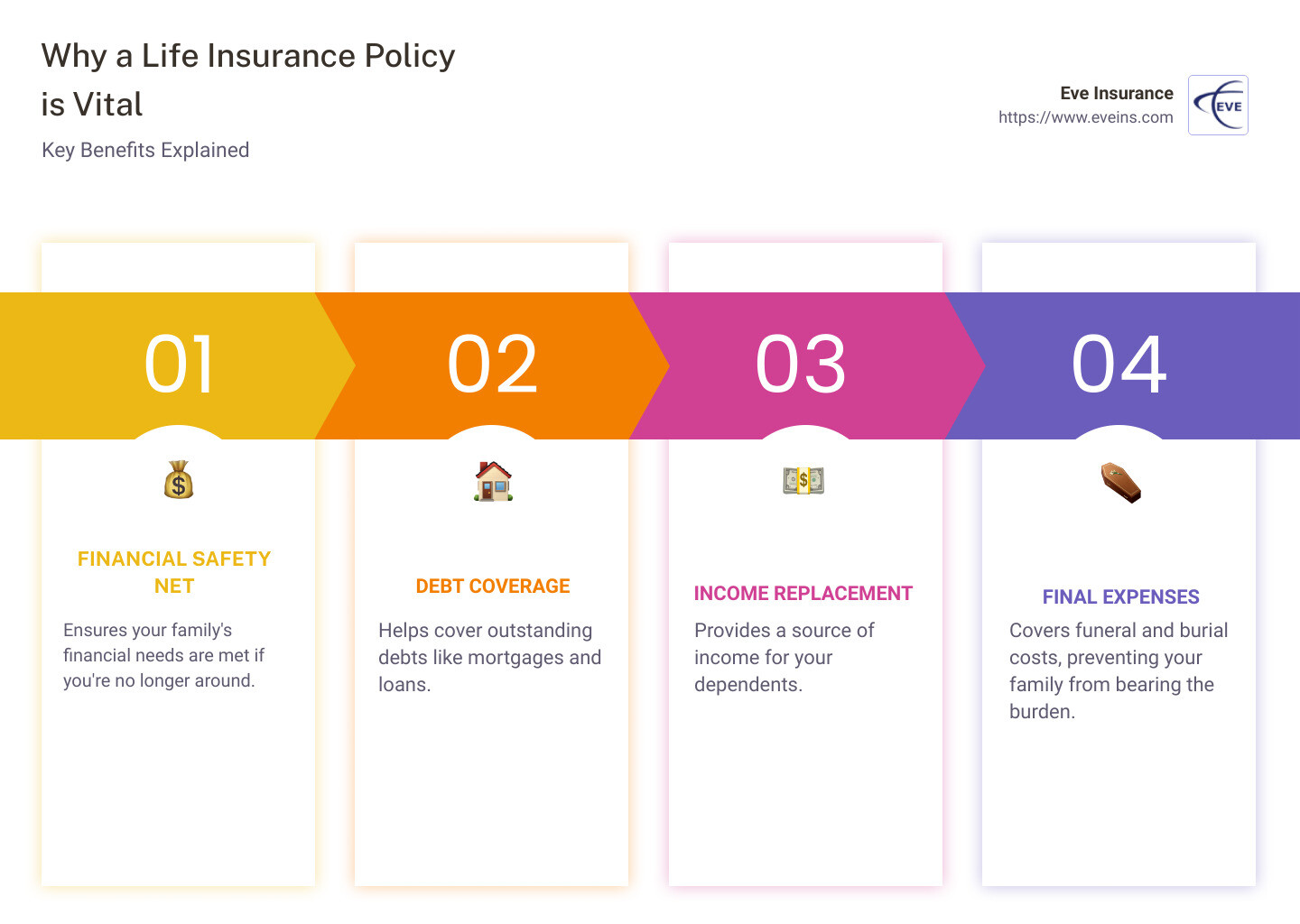
Here’s a quick snapshot of why a life insurance policy is vital:
- Financial Safety Net: Ensures your family’s financial needs are met if you’re no longer around.
- Debt Coverage: Helps cover outstanding debts like mortgages and loans.
- Income Replacement: Provides a source of income for your dependents.
- Final Expenses: Covers funeral and burial costs, preventing your family from bearing the burden.
My name is Greg Eve and I’ve spent years guiding clients to secure their dreams through well-chosen life insurance policies.
What is a Life Insurance Policy?
A life insurance policy is a contract between you and an insurance company. In this contract, you agree to pay regular premiums. In return, the insurance company promises to pay a lump sum, known as the death benefit, to your designated beneficiaries when you pass away.
Key Components of a Life Insurance Policy
- Contract: The life insurance policy is a legally binding agreement. It outlines the terms and conditions under which the insurer will pay the death benefit.
- Premium: This is the amount you pay to keep your policy active. Premiums can be paid monthly, quarterly, or annually. The cost varies based on factors like your age, health, and the type of policy you choose. For instance, younger and healthier individuals often get lower premiums.
- Death Benefit: This is the money your beneficiaries receive upon your passing. The amount can be used for various purposes, such as covering funeral costs, paying off debts, or even daily living expenses. For example, a $250,000 policy might cost as little as $16 per month.
- Beneficiaries: These are the people you choose to receive the death benefit. They can be family members, friends, or even charitable organizations. It’s crucial to keep this information updated to ensure the right people get the benefits.
How It Works
Imagine you’re a young parent with a new mortgage and a baby on the way. You decide to get a term life insurance policy for 30 years with a $250,000 death benefit. If you pass away within those 30 years, your spouse can use the death benefit to pay off the mortgage and cover other costs, providing financial security for your family.
Why It Matters
A life insurance policy provides peace of mind. It ensures that your loved ones won’t struggle financially if something happens to you. It’s not just for covering debts or funeral costs; it can also help replace your income, support your children’s education, and maintain your family’s standard of living.
In the next section, we’ll dive into the different types of life insurance policies available, helping you understand which might be the best fit for your needs.
Types of Life Insurance Policies
Understanding the different types of life insurance policies is crucial to finding the right one for you. Let’s break down the main options: term life insurance, whole life insurance, and guaranteed acceptance whole life insurance.
Term Life Insurance
Term life insurance is designed for temporary needs. It provides coverage for a specific period, usually 10, 15, 20, or 30 years. If you pass away during this term, your beneficiaries receive a death benefit.
- Lower premiums: Term life insurance typically has lower premiums compared to other types, making it an affordable option.
- Specific time period: Ideal for covering financial responsibilities that have an end date, like paying off a mortgage or funding your child’s education.
Example: Imagine you’re in your 30s, recently bought a home, and have a 30-year mortgage. A 30-year term life insurance policy can ensure that if you pass away, your family won’t have to worry about mortgage payments.
Whole Life Insurance
Whole life insurance offers lifetime coverage. As long as you pay your premiums, the policy remains active, and your beneficiaries will receive a death benefit whenever you pass away.
- Level premiums: Your premium stays the same throughout your life, making it easier to budget.
- Cash value: Part of your premium goes into a savings component, which builds cash value over time. You can borrow against this cash value or even use it to pay premiums in the future.
Example: Suppose you have long-term dependents or want to ensure your family has financial security regardless of when you pass away. Whole life insurance can provide that peace of mind.
Guaranteed Acceptance Whole Life Insurance
Guaranteed acceptance whole life insurance is a type of whole life insurance that doesn’t require a medical exam. It’s designed for people who might have trouble qualifying for other types of life insurance due to health issues.
- No medical exam: You only need to answer a few health questions to qualify.
- Lifetime coverage: Just like standard whole life insurance, it offers coverage for your entire life.
- Regardless of health: Ideal for those with pre-existing conditions or older adults looking for lifetime coverage.
Example: If you’re in your 50s with a medical condition, guaranteed acceptance whole life insurance can ensure your family is protected without the hassle of medical exams.
Each type of life insurance policy serves different needs. In the next section, we’ll help you determine which one might be the best fit for your situation by considering your financial goals, coverage amount, term length, and premium affordability.
How to Choose the Right Life Insurance Policy
Selecting the right life insurance policy can feel overwhelming. But by focusing on a few key factors, you can find a policy that fits your needs.
Factors to Consider
Financial Goals: Start by identifying what you want your life insurance policy to achieve. Do you need to replace income for your family, cover debts, or leave an inheritance? Your goals will guide your choice.
Coverage Amount: Estimate how much money your beneficiaries will need. Consider expenses like mortgage payments, college tuition, and daily living costs. The general rule is to have coverage that’s at least several times your annual salary.
Term Length: Decide how long you need the coverage. If you have young children, you might want a term that lasts until they’re financially independent. For lifelong financial security, consider a whole life policy.
Premium Affordability: Ensure that the premiums fit your budget. Term life insurance usually has lower premiums, while whole life insurance offers cash value accumulation but at a higher cost.
Age: The younger you are, the cheaper your premiums. It’s wise to lock in a policy early to take advantage of lower rates.
Medical History: Your health impacts your premiums. If you have a pre-existing condition, a guaranteed acceptance whole life policy might be your best bet.
Lifestyle: Factors like smoking, high-risk hobbies, and occupation can affect your premiums. Be honest when disclosing this information to avoid issues later.
Dependents: Consider the number of people who rely on you financially. More dependents generally mean a higher coverage amount is needed.
Working with a Financial Advisor
Navigating life insurance can be tricky, but a financial advisor can help. They offer personalized advice based on your unique situation. Here’s how they can assist:
Calculate Coverage: An advisor can help you determine the exact amount of coverage you need. They’ll consider your income, debts, and future expenses to ensure you’re neither over- nor underinsured.
Personalized Advice: Advisors can recommend specific policies that align with your financial goals. They can also help you understand the pros and cons of term vs. whole life insurance.
Example: Suppose you’re a 35-year-old homeowner with two kids. A financial advisor might suggest a $500,000 term life policy to cover your mortgage and children’s education until they’re adults.
Choosing the right life insurance policy involves careful consideration of your financial goals, coverage needs, and budget. In the next section, we’ll explore the costs associated with different types of life insurance policies.
Cost of Life Insurance Policies
When it comes to the cost of life insurance policies, several factors come into play. Let’s break it down into term life insurance and whole life insurance costs, and see how age, health, and coverage amounts affect premiums.
Term Life Insurance Costs
Term life insurance is generally more affordable than whole life insurance. This type of policy covers you for a specific period, like 10, 20, or 30 years.
- Average Costs: For a healthy 30-year-old, a 20-year, $250,000 term life policy can cost less than $200 per year. That’s around $16 per month!
- $100,000 Policy: A 30-year-old might pay roughly $10 per month.
- $500,000 Policy: The same person might pay about $25 per month.
Factors Affecting Premiums:
- Age: The younger you are, the lower your premiums.
- Health: Non-smokers and those with no major health issues pay less.
- Term Length: Longer terms cost more.
- Coverage Amount: Higher coverage means higher premiums.
Example: A 40-year-old smoker might pay $50 a month for a $250,000 policy, while a non-smoker of the same age might pay only $30.
Whole Life Insurance Costs
Whole life insurance offers lifetime coverage and has a cash value component that grows over time. This makes it more expensive than term life insurance.
- Higher Premiums: For a healthy 30-year-old, a $250,000 whole life policy could cost over $100 per month.
- Cash Value Accumulation: Part of your premium goes into a savings account, which can grow and be borrowed against.
- Long-term Benefits: This policy never expires as long as you pay the premiums, providing lifelong peace of mind.
Factors Affecting Premiums:
- Age: Again, younger people pay less.
- Health: Good health lowers costs.
- Coverage Amount: Higher coverage increases premiums.
- Cash Value: The potential to borrow against the policy adds value.
Example: A 50-year-old might pay nearly $300 per month for a $250,000 whole life policy, whereas a 25-year-old might pay around $150.
Understanding the cost of life insurance policies helps you choose the right one for your needs. Next, we’ll look at the benefits of having a life insurance policy.
Benefits of Life Insurance Policies
Life insurance offers more than just a payout upon death. Here are some key benefits of a life insurance policy:
Financial Protection
Life insurance provides a financial safety net for your loved ones. If you pass away, your beneficiaries receive a death benefit. This money can be used however they need, ensuring they’re supported during a difficult time.
Funeral Expenses
Funeral costs can be surprisingly high. A life insurance policy can cover these expenses, easing the financial burden on your family. According to the Insurance Information Institute, life insurance can pay for funeral and burial costs, probate, and other estate administration costs.
Debt Coverage
Outstanding debts don’t disappear when you die. Life insurance can help cover personal debts like credit card bills, car loans, and medical expenses. This prevents your family from being saddled with these financial obligations.
Income Replacement
If you’re the primary earner, your income is crucial for your family’s lifestyle. Life insurance can replace your income, helping your family maintain their standard of living. This is especially important if you have young children or a spouse who relies on your earnings.
Childcare
For stay-at-home parents, a life insurance policy can cover the cost of childcare and household duties. This ensures that your children’s needs are met even if you’re not there to provide for them.
College Tuition
Education is a significant expense. Life insurance can help cover college tuition for your children, ensuring they have the opportunity to pursue higher education without financial strain.
Mortgage
A life insurance policy can help pay off your mortgage, preventing your family from losing their home. This is a common reason people purchase life insurance, as highlighted by Fidelity.
Business Protection
If you own a business, life insurance can protect it. The death benefit can help cover business expenses, keep operations running smoothly, or even buy out a deceased partner’s share. This ensures your business’s continuity and stability.
These additional benefits make life insurance a versatile tool for financial planning. Next, we’ll answer some frequently asked questions about life insurance policies.
Frequently Asked Questions about Life Insurance Policies
How much is $100,000 in life insurance a month?
The cost of a $100,000 life insurance policy varies depending on several factors like age, health, and the type of policy. For example, a healthy 30-year-old might pay around $10 per month for a term life policy. However, if you opt for a whole life policy, the monthly premium could be significantly higher, often exceeding $50 per month. The younger and healthier you are, the lower your premiums will be.
How much is $500,000 worth of life insurance?
A $500,000 life insurance policy’s cost also depends on factors like age, health, and policy type. For a healthy 30-year-old, a term life insurance policy might cost around $20-$30 per month. On the other hand, a whole life insurance policy for the same individual could cost around $300 per month or more. It’s essential to get quotes from different insurers to find the best rate.
What is the cash value of a $10,000 life insurance policy?
The cash value of a $10,000 whole life insurance policy accumulates over time as you pay premiums. This cash value can be accessed through loans or withdrawals. However, the exact amount depends on how long you’ve had the policy and the policy’s terms. For instance, after 10 years, the cash value might be a few thousand dollars, but this can vary widely. It’s best to consult with your insurer for specific details about your policy’s cash value.
These FAQs provide a snapshot of what you can expect in terms of costs and benefits. Next, we’ll wrap up our discussion on life insurance policies.
Conclusion
Choosing the right life insurance policy is crucial for ensuring your family’s financial security. We’ve explored the various types of life insurance, including term life, whole life, and guaranteed acceptance whole life insurance. Each option offers unique benefits tailored to different needs and circumstances.
At Eve Insurance, we understand that everyone’s situation is unique. That’s why we offer tailored solutions to fit your specific needs and goals. Whether you’re looking for temporary coverage to protect your mortgage or lifetime coverage to leave a legacy, we have options that can provide peace of mind.
Financial protection is more than just a policy—it’s about securing your loved ones’ future. From covering funeral expenses to replacing lost income, the right life insurance policy can make a significant difference in your family’s life.
If you’re ready to take the next step, visit our Life Insurance Service Page to get started. We’re here to help you find the best coverage for your needs, ensuring you can live life confidently, knowing your loved ones are protected.
By choosing Eve Insurance, you’re not just buying a policy; you’re investing in peace of mind.