

Understanding Life Insurance Monthly Costs
How much is life insurance per month? This is a common question for those looking to secure financial protection for their loved ones. Here is a quick snapshot to address the search intent:
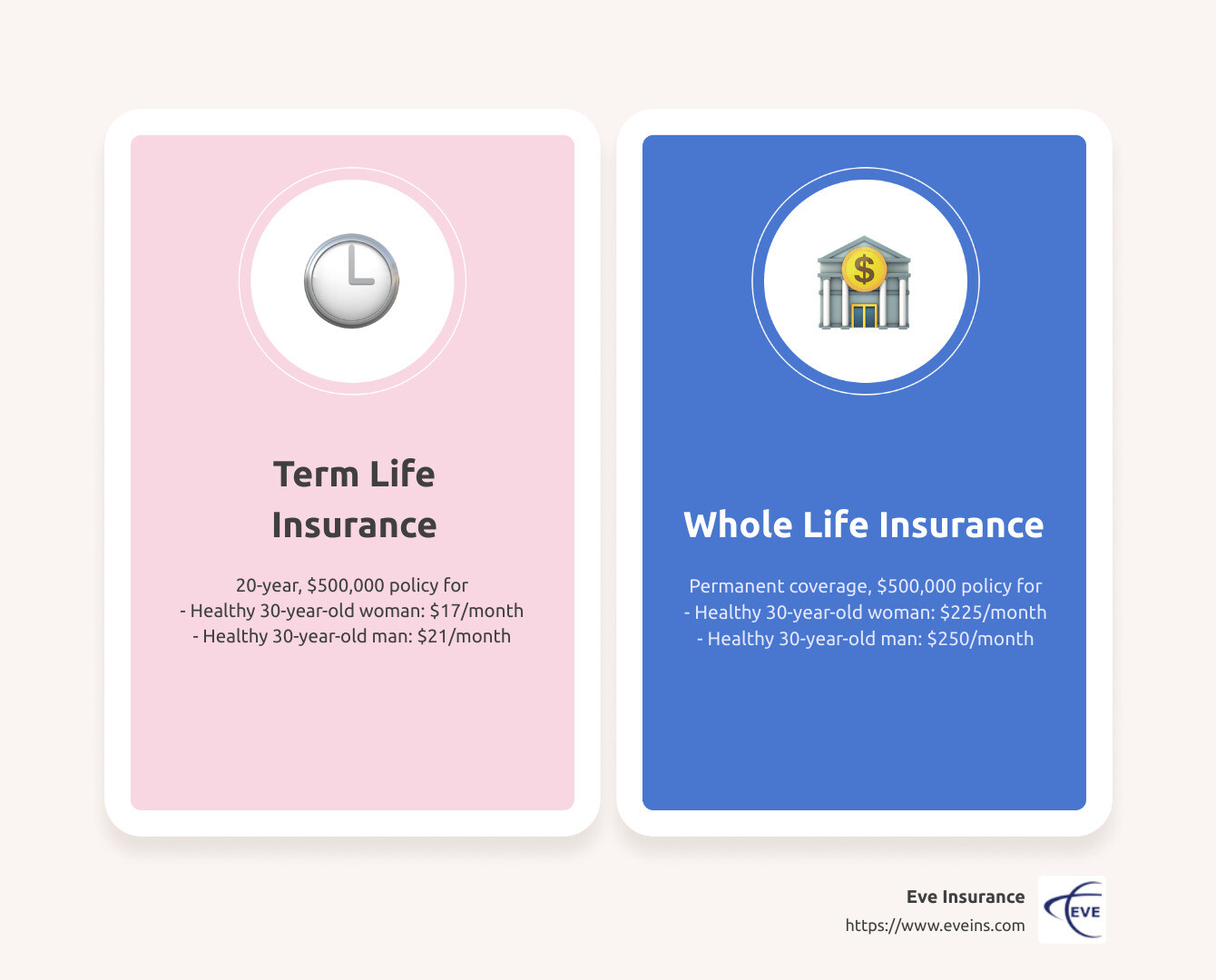
- Term Life Insurance (20-year, $500,000 policy):
- Healthy 30-year-old woman: $17/month
- Healthy 30-year-old man: $21/month
Life insurance is a key financial tool that can provide peace of mind by ensuring your loved ones are financially protected in case of your unexpected passing. At Eve Insurance, we believe in helping you understand the nuances of life insurance, making it easier to find the right policy to meet your needs and budget.
Life insurance isn’t just for breadwinners. It also benefits anyone whose absence would create financial strain, such as caregivers. With the proper coverage, you can help your family handle funeral costs, replace lost income, pay off debts, and even fund future expenses, like college tuition.
How Much is Life Insurance Per Month?
Understanding how much life insurance costs each month is crucial for planning. Life insurance expenses vary based on several factors, including age, gender, health, and the type of policy you choose.
Term Life Insurance Monthly Costs
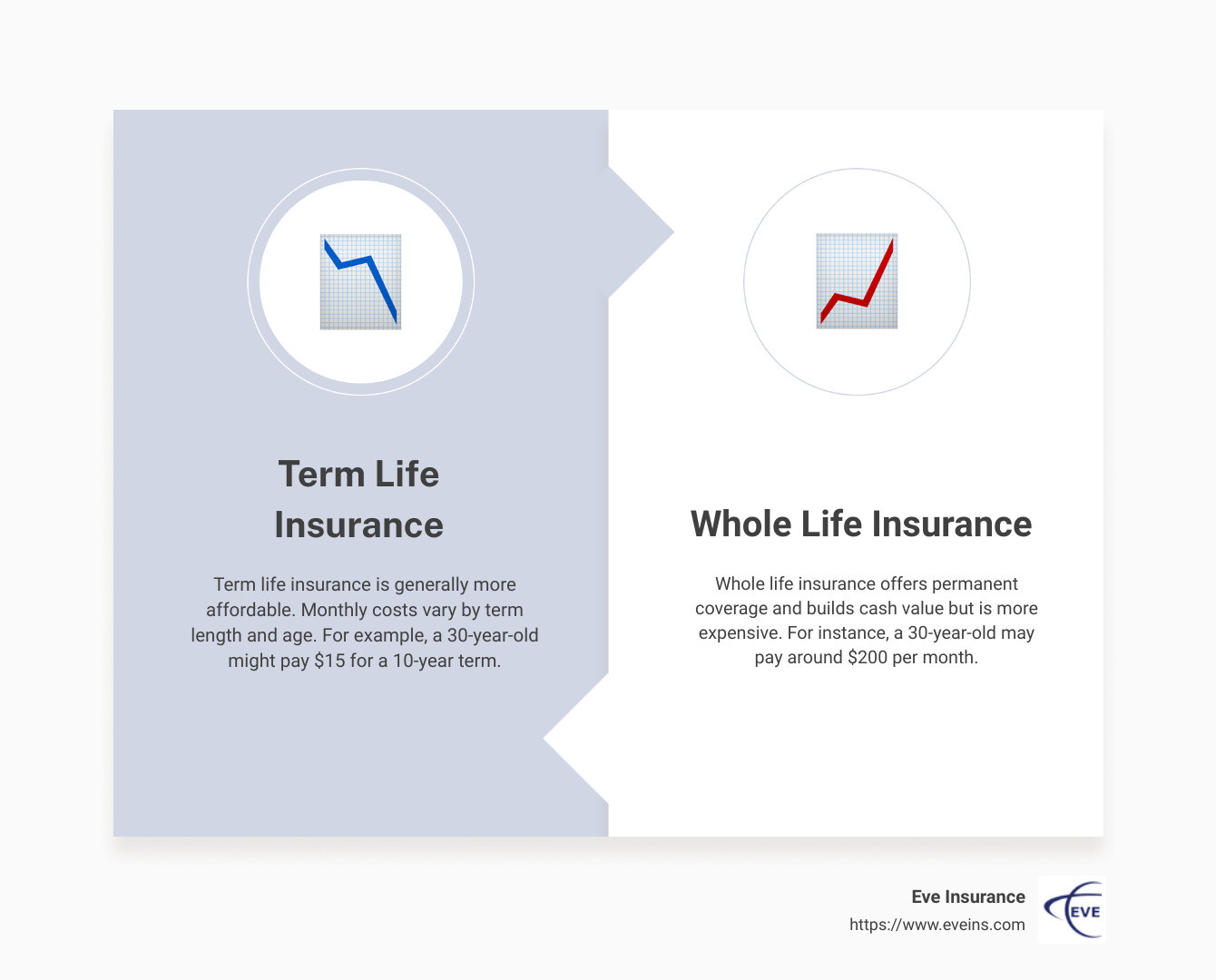
Term life insurance is usually more affordable. Here are some common term lengths and what you might expect to pay:
- 10-Year Term: Costs are lower for younger individuals. A 30-year-old might pay around $15 per month.
- 20-Year Term: A bit more expensive. A 40-year-old could expect to pay about $30 per month.
- 30-Year Term: Higher costs due to the longer term. A 50-year-old might pay around $70 per month.
Whole Life Insurance Monthly Costs
Whole life insurance is more expensive but offers permanent coverage and builds cash value. Here’s what you might expect:
- Age 30: Around $200 per month.
- Age 40: Roughly $300 per month.
- Age 50: Could be about $400 per month.
Factors Affecting Costs
- Age: Younger people generally pay less.
- Gender: Women often pay less than men.
- Health: Healthier individuals get lower rates.
- Smoking Status: Smokers pay more.
- Policy Type: Term life is cheaper than whole life.
Life insurance can be tailored to fit your needs and budget. It’s essential to compare quotes and understand what influences the costs.
In summary, knowing the monthly costs of life insurance helps you plan better. Whether you choose term or whole life insurance, understanding these factors will guide you in making an informed decision.
Factors Affecting Life Insurance Costs
Understanding the factors that affect life insurance costs can help you make informed decisions. Here are the main elements that influence how much you’ll pay for life insurance per month:
Age
Age is one of the most significant factors. The younger you are when you purchase a policy, the lower your premium will be. For instance, a 30-year-old might pay around $30 per month for a $1 million 20-year term life insurance policy, while a 50-year-old might pay $129 per month for the same coverage. This is because younger individuals are generally healthier and have a longer life expectancy.
Gender
Gender also plays a crucial role. On average, men pay more for life insurance than women. For example, 30-year-old men pay about 25% more than women for a 20-year $1 million term life insurance policy. The difference increases with age; at 50, males pay 34% more than females for the same policy. This is because women tend to live longer than men.
Health
Your health status significantly impacts your life insurance premiums. People in excellent health pay less compared to those with health issues. Conditions like diabetes, high blood pressure, and heart disease can raise your premiums. For example, if you have a life-threatening condition, you may even be denied coverage.
Smoking Status
Smoking status is another critical factor. Smokers pay substantially higher premiums than non-smokers. For instance, a 50-year-old female smoker might pay $1,148.40 per month for a $1 million whole life insurance policy, while a non-smoker pays $957.00. Quitting smoking can significantly reduce your premiums over time.
Hobbies
Engaging in risky hobbies like skydiving or mountain climbing can increase your life insurance rates. Insurers view these activities as higher risk, which means higher premiums. However, if you engage in these activities less frequently, it might not impact your rates as much.
Occupation
Your occupation can also affect your life insurance costs. Jobs that are considered high-risk, such as firefighting or piloting, will lead to higher premiums compared to safer professions like accounting. This is because high-risk jobs increase the likelihood of an early claim.
Coverage Amount
The coverage amount you choose will directly impact your monthly premiums. Higher coverage amounts mean higher premiums. For instance, a $1 million policy will cost more per month than a $500,000 policy. However, some companies offer discounts for higher coverage amounts, so it’s worth exploring your options.
Policy Type
Lastly, the policy type you choose affects your monthly costs. Term life insurance is generally cheaper than whole life insurance. For example, a 30-year-old male might pay around $30 per month for a 20-year $1 million term life policy, while the same individual could pay $245.50 per month for a $500,000 whole life policy. Whole life insurance includes a cash value component, which makes it more expensive.
Understanding these factors can help you make smarter choices and find a policy that fits your needs and budget. Next, we’ll dive into how much you can expect to pay for different types of life insurance policies.
How Much is Life Insurance Per Month?
When it comes to how much is life insurance per month, the cost can vary greatly based on multiple factors. Let’s break down the average costs for both term life and whole life insurance, and how these costs can differ by age and gender.
Term Life Insurance Monthly Costs
Term life insurance is typically more affordable than whole life insurance. It lasts for a set number of years (like 10, 20, or 30 years) and pays a death benefit if you pass away within that term.
Here are some average monthly costs for term life insurance based on age and gender:
10-Year Term:
- Age 30:
- Female: $16
- Male: $19
- Age 40:
- Female: $24
- Male: $28
- Age 50:
- Female: $55
- Male: $70
20-Year Term:
- Age 30:
- Female: $18
- Male: $21
- Age 40:
- Female: $34
- Male: $45
- Age 50:
- Female: $67
- Male: $87
30-Year Term:
- Age 30:
- Female: $30
- Male: $40
- Age 40:
- Female: $60
- Male: $80
As you can see, term life insurance is generally more affordable for younger individuals and for women compared to men. The cost increases with age and the length of the term.
Whole Life Insurance Monthly Costs
Whole life insurance is a type of permanent life insurance that lasts your entire life and includes a cash value component. This makes it significantly more expensive than term life insurance.
Here are some average monthly costs for whole life insurance based on age and gender:
Age 30:
- Female: $329
- Male: $365
Age 40:
- Female: $510
- Male: $545
Age 50:
- Female: $808
- Male: $849
Whole life insurance rates are higher because they offer lifelong coverage and build cash value over time. This cash value can be used as an investment or borrowed against while you’re still alive.
Smokers can expect to pay even higher premiums. For example, a 30-year-old male smoker might pay around $584.40 per month for a $500,000 whole life policy, compared to $487 for a non-smoker.
Understanding these costs can help you choose the right policy for your needs and budget. Next, we’ll explore how life insurance costs vary based on the coverage amount.
Life Insurance Costs by Coverage Amount
When deciding how much is life insurance per month, the coverage amount plays a big role. Let’s break down the costs for different coverage amounts: $100,000, $250,000, $500,000, and $1,000,000.
$100,000 Policy
A $100,000 policy is often chosen for basic coverage needs. For a healthy 30-year-old non-smoking woman, a 10-year term policy costs around $7 per month. For a 30-year-old non-smoking man, it’s about $9 per month.
$250,000 Policy
With a $250,000 policy, you get more coverage for things like mortgage payments or children’s education. For a 30-year-old non-smoking woman, a 20-year term policy costs about $12 per month. For a 30-year-old non-smoking man, it’s around $14 per month.
$500,000 Policy
A $500,000 policy is a common choice for families. For a 30-year-old non-smoking woman, a 20-year term policy costs about $20 per month. For a 30-year-old non-smoking man, it’s around $25 per month.
$1,000,000 Policy
If you need more substantial coverage, a $1,000,000 policy might be right for you. For a 30-year-old non-smoking woman, a 20-year term policy costs about $34 per month. For a 30-year-old non-smoking man, it’s around $41 per month.
Comparing Term and Whole Life Costs
While term policies are more affordable, whole life policies offer permanent coverage. For example, a 30-year-old non-smoking woman can expect to pay about $352 per year for a $500,000 whole life policy, which is roughly $29 per month. For a 30-year-old non-smoking man, it’s about $394 per year, or around $33 per month.
Understanding these costs helps you choose the right amount of coverage for your needs and budget. Next, we’ll dive into how to lower your life insurance rates.
How to Lower Your Life Insurance Rates
Lowering your life insurance rates can save you a lot of money over time. Here are some practical steps you can take:
Maintain a Healthy Lifestyle
Staying in good health is a key factor. Insurers look at your overall health, including your weight, blood pressure, and cholesterol levels. By eating well, exercising regularly, and getting regular check-ups, you can present a lower risk to insurers, potentially lowering your premiums.
Quit Smoking
Smoking significantly increases your life insurance rates. For instance, a smoker might pay two to three times more than a non-smoker of the same age and health. Quitting smoking can dramatically lower your rates. Insurers usually require you to be smoke-free for at least a year before offering lower rates.
Manage Medical Conditions
Keep chronic conditions under control. If you have conditions like diabetes or high blood pressure, following your doctor’s treatment plan can help. Regularly taking your medication and attending follow-up appointments show insurers you are managing your health, which can lead to lower rates.
Avoid Risky Hobbies
High-risk activities such as skydiving, scuba diving, or racing can increase your premiums. Limiting these activities can help reduce your rates. Insurers assess the frequency and risk level of these hobbies when setting your premiums.
Apply Early
The sooner you apply, the better. Life insurance rates are generally lower when you’re younger. For example, a 30-year-old might pay around $231 per year for a 20-year, $500,000 term policy, whereas a 50-year-old might pay $642 per year for the same coverage. Applying early locks in lower rates before age-related health issues arise.
Taking these steps can help you secure more affordable life insurance. Next, we’ll answer some frequently asked questions about life insurance monthly costs.
Frequently Asked Questions about Life Insurance Monthly Costs
How much is the average life insurance per month?
The average cost of life insurance can vary widely based on several factors, including age, gender, health, and the type of policy. For term life insurance, a 30-year-old male might pay around $30 per month for a 20-year policy with a $500,000 payout. A 30-year-old female might pay about $23 per month for the same coverage.
For whole life insurance, which includes a cash value component and lasts your entire life, the costs are significantly higher. A 30-year-old male can expect to pay about $487 per month, while a 30-year-old female might pay around $414.50 per month for a $500,000 policy.
How much is a $500,000 life insurance policy?
The cost of a $500,000 life insurance policy depends on whether you choose term or whole life insurance and other personal factors like age and smoking status.
- Term Life Insurance: For a 30-year-old non-smoker, a 20-year term policy might cost around $30 per month for males and $23 per month for females.
- Whole Life Insurance: For the same 30-year-old non-smoker, a $500,000 whole life policy could cost about $487 per month for males and $414.50 per month for females.
Smokers can expect to pay higher premiums. For example, a 30-year-old male smoker might pay around $584.40 per month for a $500,000 whole life policy, while a female smoker of the same age might pay about $497.40 per month.
How much does a $1,000,000 life insurance policy cost per month?
The monthly cost for a $1,000,000 life insurance policy varies based on the type of policy, age, and other factors.
- Term Life Insurance: A 30-year-old male might pay around $38 per month for a 20-year term policy, while a female might pay about $32 per month for the same coverage.
- Whole Life Insurance: For a 30-year-old male, a $1,000,000 whole life policy could cost approximately $954.50 per month, whereas a female might pay around $814.00 per month.
Age also plays a significant role. For example, a 50-year-old male might pay around $849 per month for a $1,000,000 whole life policy, while a female of the same age might pay about $808 per month.
By understanding these costs, you can better plan and choose the right life insurance policy for your needs.
Conclusion
Understanding how much is life insurance per month can help you make an informed decision that fits your financial plan. We’ve covered various factors that affect life insurance costs, including age, gender, health, and lifestyle choices. We’ve also broken down the costs for both term and whole life insurance policies, showing how different coverage amounts can impact your monthly premiums.
At Eve Insurance, we are committed to helping you find the best life insurance policy that meets your needs and budget. Whether you’re looking for a term life policy to cover specific years or a whole life policy for lifelong protection, we offer affordable options tailored to your situation.
Getting a quote is simple and quick. Visit our Life Insurance page to start your journey toward securing your family’s financial future.
The sooner you apply, the better rates you can lock in. Contact us today to see how affordable life insurance can be.