

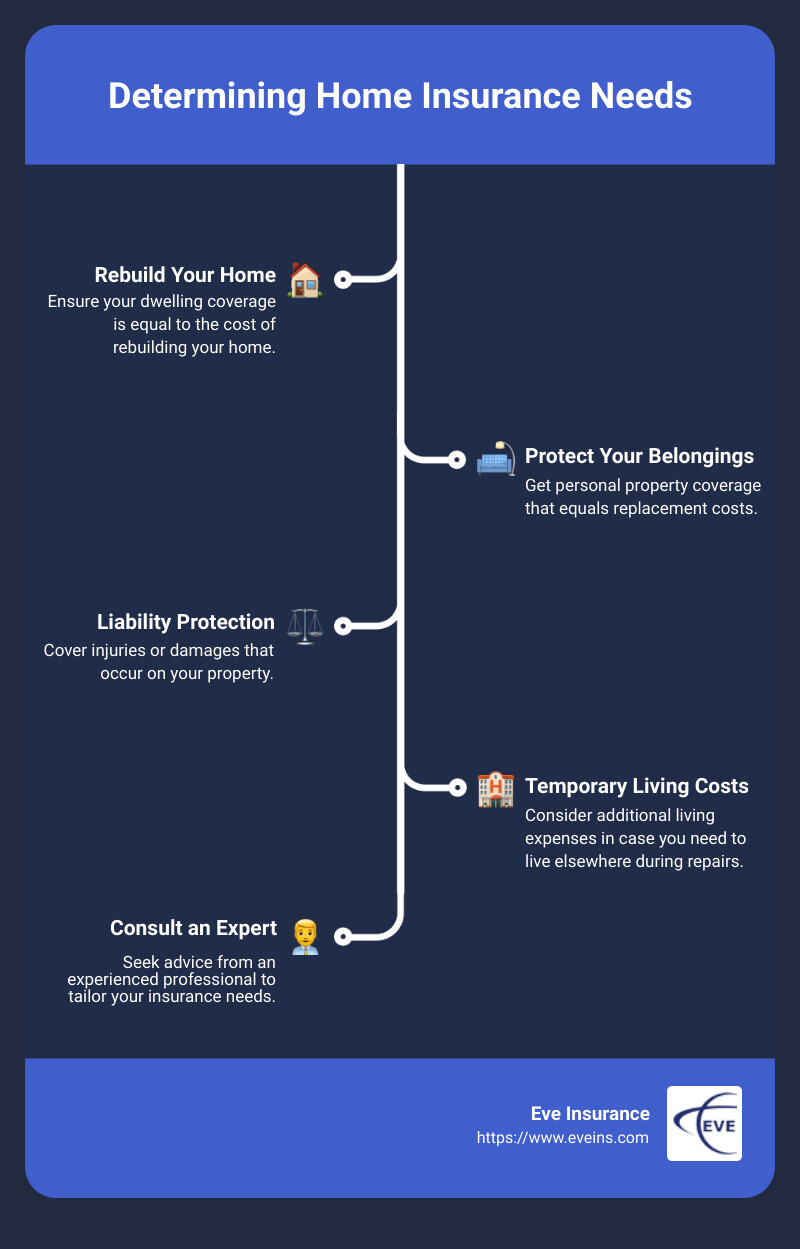
How much home insurance do I need? This is a vital question every homeowner should address to protect their investment and ensure peace of mind. The right amount of home insurance safeguards your home against unexpected damage and potential financial loss. To quickly determine your coverage needs, consider the following:
- Rebuild your home: Get dwelling coverage equal to the cost of rebuilding your home.
- Protect your belongings: Ensure personal property coverage that equals replacement costs.
- Liability protection: Cover injuries or damages that occur on your property.
- Temporary living costs: Consider additional living expenses in case you need to live elsewhere during repairs.
I’m Greg Eve, and I have over a decade of experience assisting homeowners in finding the right amount of home insurance. After a client once called us “Dream Protectors,” I’ve been driven to help many others protect their most valuable investments. Let’s dive deeper into what this means for you.
Understanding Home Insurance Coverage
How Much Home Insurance Do I Need?
When considering how much home insurance do I need, think about the costs to rebuild your home, replace your belongings, and cover potential liabilities. Your home insurance should cover:
- The full cost to rebuild your home.
- The replacement value of your personal belongings.
- Liability coverage for injuries or damages on your property.
- Additional living expenses if you need to live elsewhere during repairs.
Calculating Dwelling Coverage
Dwelling coverage is the cornerstone of your home insurance. It pays to rebuild your home if it’s damaged by covered perils like fire or windstorm. To calculate this, multiply your home’s square footage by the local cost per square foot for residential construction. Remember to account for special features and custom materials. Don’t base this on your home’s market value.
Factors to consider:
- Square footage: Larger homes cost more to rebuild.
- Local building costs: Prices vary by region.
- Construction materials: Custom or high-end materials increase costs.
- Home features: Unique features like arched windows or custom moldings can add to the rebuild cost.
- Inflation guard: Ensure your policy adjusts for rising costs over time.
For added peace of mind, consider extended replacement cost or guaranteed replacement cost policies. These cover rebuild costs even if they exceed your policy limits due to rising prices or other factors.
Personal Property Coverage
Personal property coverage helps replace your belongings if they’re damaged or stolen. This includes furniture, electronics, clothing, and more.
Steps to determine coverage:
- Create a home inventory: List and photograph all valuable items.
- Estimate replacement costs: Calculate what it would cost to replace each item today.
Coverage options:
- Replacement cost: Pays to replace items at current prices.
- Actual cash value: Pays what items are worth today, accounting for depreciation.
For high-value items like jewelry or art, you might need scheduled personal property coverage, which offers higher limits and broader protection.
Liability Coverage
Liability coverage protects you if someone gets injured on your property or if you accidentally damage someone else’s property.
Standard liability coverage:
- Personal liability: Covers legal fees and damages if you’re sued.
- Medical payments: Pays for minor injuries to guests, regardless of fault.
Consider an umbrella insurance policy for extra protection, especially if you have significant assets. This extends your liability coverage beyond the limits of your standard policy.

Additional Living Expenses (ALE)
If your home is uninhabitable due to a covered loss, additional living expenses (ALE) coverage helps pay for temporary housing, meals, and other extra costs.
What ALE covers:
- Hotel bills: While your home is being repaired.
- Restaurant meals: If you can’t cook at home.
- Loss of rental income: If you rent out part of your home.
Medical Payments
Medical payments coverage pays for minor injuries to guests on your property, regardless of fault. It’s typically limited to smaller amounts, like $1,000 to $5,000, and is designed to avoid lawsuits for minor incidents.
Having the right amount of home insurance ensures that you can rebuild, replace, and recover without financial strain. Next, let’s explore special considerations for home insurance.
Special Considerations for Home Insurance
Additional Living Expenses (ALE)
Temporary living costs: If a disaster like a fire or tornado destroys your house, where would you live? ALE covers the cost of living somewhere else while your home is being rebuilt. This includes hotel bills, restaurant meals, laundry, and even pet boarding. Imagine your food bill jumping from $500 to $900 a month because you can’t cook at home—ALE would cover that extra $400.
Loss of rental income: If you rent out part of your home, ALE can also reimburse you for the rental income you lose while your property is uninhabitable. This is crucial if you rely on that income to help pay your mortgage or other bills.
Home-Based Business Insurance
Running a business from home? Standard home insurance might not cover business-related risks. Here’s what you need:
Business liability: If a customer slips and falls in your home office, you could be sued. Business liability insurance covers legal costs and medical expenses.
Business property coverage: This protects the equipment and inventory specific to your business. For example, if you run a bakery from your home and your oven breaks, business property coverage could help cover the repair or replacement costs.
Identity Theft and Cyber Insurance
Identity theft and cybercrime are significant risks. Here’s how you can protect yourself:
Identity theft coverage: Recovering from identity theft can be expensive. Coverage typically includes reimbursement for stolen funds and costs related to restoring your identity.
Cyber insurance: This covers a range of cyber risks, including cyberattacks, online fraud, and even cyberbullying. If your personal data is breached, this insurance can help you recover losses and repair your credit.
Natural Disasters
Flood insurance: Standard home insurance doesn’t cover flood damage. If you live in a flood-prone area, you’ll need separate flood insurance. FEMA’s interactive flood map can help you determine your risk.
Earthquake insurance: Earthquakes aren’t just a California problem; they can happen in many states. Earthquake insurance can be added to your policy to cover rebuilding costs.
Windstorm coverage: Areas prone to hurricanes or severe storms may require separate windstorm insurance. This covers damage from wind and hail, which is often excluded from standard policies.
Ordinance or law coverage: If rebuilding your home means complying with new building codes, this coverage helps pay for those additional costs. For example, a new law might require more expensive, hurricane-resistant windows.
Frequently Asked Questions about Home Insurance
What is the appropriate amount of insurance that you should have on your house?
The appropriate amount of insurance for your house should cover the replacement cost. This is the amount it would take to rebuild your home from scratch if it were completely destroyed.
Unlike market value, which includes the price of the land, replacement cost focuses solely on the structure. This amount can vary based on local construction costs, the size of your home, and the materials used.
How do I calculate how much property insurance I need?
Calculating how much property insurance you need involves a few steps:
- Home Value Analysis: Assess the current value of your home. This includes understanding the cost of rebuilding based on local construction costs and materials.
- Replacement Cost Calculation: Use tools or consult with your insurance provider to determine the replacement cost. This should cover the cost to reconstruct your home with similar materials and quality.
- Personal Property Value: Conduct a home inventory. List all your belongings and estimate their value. This helps you determine how much personal property coverage you need.
Most policies cover personal property at 50-70% of the dwelling coverage. For high-value items like jewelry, consider scheduled personal property to ensure adequate protection.
What is the 80% rule in insurance?
The 80% rule means you need to insure your home for at least 80% of its replacement cost to receive full coverage for any partial damages. If your coverage is less than 80%, the insurance company will only pay a proportionate amount of the required coverage.
For example, if your home’s replacement cost is $500,000, you need at least $400,000 in coverage. If you only have $395,000, the insurer will pay a percentage of the claim, leaving you to cover the rest out of pocket.
This rule helps avoid penalties and ensures you have enough coverage to rebuild your home. Regularly review your policy to account for inflation and home improvements to stay compliant with the 80% rule.
Understanding these basics ensures you’re well-protected. Next, let’s explore how to calculate dwelling coverage.
Conclusion
We’ve covered a lot about home insurance, so let’s sum it up.
Key Points:
- Replacement Cost Coverage: Ensure your policy covers the full cost to rebuild your home.
- Personal Property Coverage: Protect your belongings with either replacement cost or actual cash value.
- Liability Coverage: Safeguard yourself against lawsuits and medical payments.
- Additional Living Expenses (ALE): Cover the extra costs of living if your home becomes uninhabitable.
- Special Considerations: Think about extra coverage for natural disasters like floods or earthquakes.
Having the right amount of home insurance is crucial. Not having enough coverage can leave you financially vulnerable. On the other hand, overpaying for unnecessary coverage isn’t ideal either. The goal is to strike a balance that gives you peace of mind.
Why Adequate Coverage Matters: Inadequate coverage can lead to significant out-of-pocket expenses. For example, if your home’s replacement cost is $500,000 but you’re only insured for $400,000, you could be left covering the gap if disaster strikes. Regularly review and update your policy to account for inflation and home improvements.
Eve Insurance: Tailored Solutions for Peace of Mind
At Eve Insurance, we specialize in providing tailored insurance solutions that fit your unique needs. Whether you’re a new homeowner or looking to reassess your current policy, our experts are here to help you find the perfect coverage.
Why Choose Us?
- Personalized Service: We understand that every home is different. Our agents will work with you to customize a policy that fits your specific situation.
- Expert Guidance: Our team stays up-to-date on the latest trends and risks in home insurance, ensuring you get the best advice.
- Comprehensive Coverage: From basic dwelling coverage to specialized add-ons like flood insurance, we’ve got you covered.
Secure your home and your peace of mind with Eve Insurance. Get in touch with us today to find out how we can help you protect your biggest investment.
By understanding the importance of adequate coverage and choosing the right insurance provider, you can ensure that your home and finances are well-protected.