
Understanding Michigan Car Insurance Laws
If you’re wondering how much car insurance do I need in Michigan, you’ve come to the right place. Michigan has specific requirements for car insurance, primarily due to its unique no-fault insurance system. Here’s a quick overview of the mandatory coverage you must have:
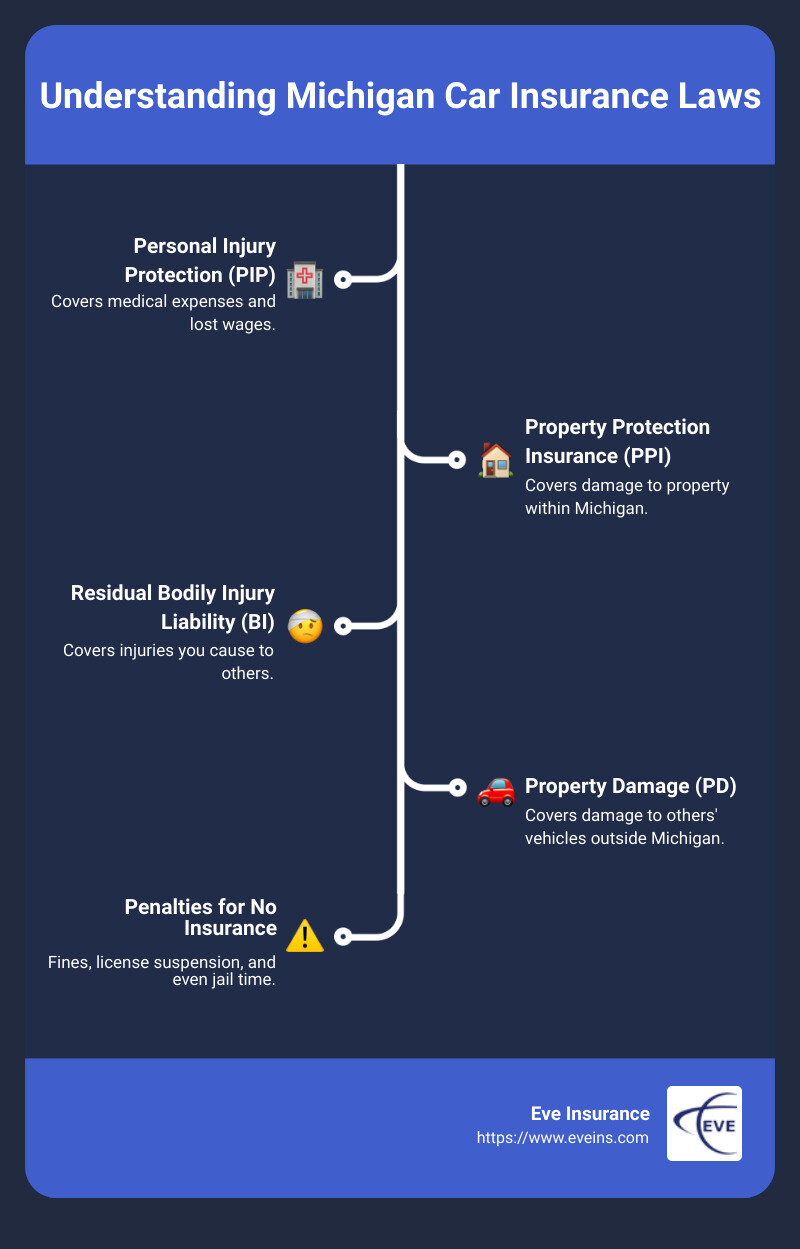
- Personal Injury Protection (PIP): Covers medical expenses and lost wages.
- Property Protection Insurance (PPI): Covers damage to property within Michigan.
- Residual Bodily Injury Liability (BI): Covers injuries you cause to others.
- Property Damage (PD): Covers damage to others’ vehicles outside Michigan.
Not meeting these requirements can result in severe penalties, including fines, license suspension, and even jail time. Always ensure you’re adequately covered to avoid these consequences.
I’m Greg Eve, an expert in Michigan car insurance laws with years of experience in the insurance industry. My mission is to protect you from unexpected financial risks through tailored coverage solutions. Let’s dive deeper into understanding how much car insurance you actually need in Michigan.
Understanding Michigan’s Car Insurance Requirements
Navigating car insurance in Michigan can be tricky, but it’s crucial to understand the state’s requirements to stay compliant and protected. Here, we’ll break down the essentials: minimum liability coverage, personal injury protection (PIP), property protection insurance (PPI), residual bodily injury liability (BI), and property damage (PD).
Minimum Liability Coverage
In Michigan, the minimum liability coverage you need is often referred to as 50/100/10. What does that mean?
- $50,000 for bodily injury per person
- $100,000 for bodily injury per accident
- $10,000 for property damage
This liability coverage ensures that if you’re at fault in an accident, your insurance will cover the costs up to these limits. However, keep in mind that these are just the minimums—opting for higher limits can offer better protection.
Personal Injury Protection (PIP)
Michigan’s no-fault insurance system requires every driver to have Personal Injury Protection (PIP). PIP covers your medical expenses, regardless of who caused the accident.
You have several options for PIP coverage:
- Unlimited: Covers all medical expenses without a cap.
- $500,000: A substantial amount but with a limit.
- $250,000: A moderate level of coverage.
- $50,000: The minimum, available only to Medicaid recipients.
- Opt-out: Available if you have qualifying health coverage.
The right PIP level for you will depend on your health insurance and personal circumstances.
Property Protection Insurance (PPI)
Property Protection Insurance (PPI) is unique to Michigan and provides up to $1 million in coverage. This insurance covers damage your car might cause to stationary property, like:
- Buildings
- Road signs
- Road construction equipment
- Fences and barriers
- Parked vehicles
PPI does not cover damage to other vehicles unless they are parked.
Residual Bodily Injury Liability (BI)
Even though Michigan is a no-fault state, you still need residual bodily injury liability coverage. This kicks in for severe cases, like death or permanent disfigurement, and if you cause an accident out of state. The coverage levels are:
- $250,000 per person
- $500,000 per accident
There are also lower limits available ($50,000 per person, $100,000 per accident), but higher limits offer better protection.
Property Damage (PD)
Property damage liability covers you if you cause damage to property outside of Michigan. The state minimum is $10,000, but experts recommend getting at least $100,000 in coverage to better protect yourself.
Understanding these basics will help you make informed decisions about your car insurance in Michigan. Up next, we’ll discuss how much car insurance you actually need to fully protect yourself and your assets.
How Much Car Insurance Do I Need in Michigan?
Recommended Coverage Levels
When it comes to how much car insurance do I need in Michigan, it’s best to go beyond the state minimum requirements. Here are our recommendations for full coverage:
- Unlimited PIP (Personal Injury Protection): This covers all medical expenses if you’re injured in an accident. Michigan’s no-fault system means your insurance pays for your injuries, regardless of who caused the accident. Opting for unlimited PIP ensures you’re fully covered, no matter the cost.
- Liability/Bodily Injury Insurance: We recommend limits of $500,000 per person and $1 million per accident. This offers better protection if you’re sued for causing injury in an accident. The state minimums are $250,000 and $500,000, respectively, but higher limits can safeguard your assets.
- Property Damage Insurance: For out-of-state accidents, a limit of at least $100,000 is advisable. The state minimum is $10,000, which may not be enough to cover significant damage.
- Uninsured/Underinsured Motorist Coverage: Set limits at $500,000 per person and $1 million per accident. This protects you if you’re hit by a driver with little or no insurance.
- Comprehensive and Collision Coverage: Both should have a maximum deductible of $1,000. Comprehensive covers non-collision incidents like theft or natural disasters, while collision covers damage from accidents.
Optional Coverages
In addition to the recommended levels, consider these optional coverages to enhance your protection:
- Loan/Lease Payoff (Gap Insurance): If your car is totaled, this covers the difference between what you owe on your loan or lease and the car’s actual value. New cars depreciate quickly, so this can be essential.
- Rental Car Reimbursement: This covers the cost of a rental car while your vehicle is being repaired after an accident. It’s a small addition that can save you a lot of hassle.
- Roadside Assistance: Provides help if you get stranded due to a breakdown, flat tire, or other issues. It’s a convenient add-on that can offer peace of mind.
- Mini Tort Coverage: Up to $3,000 to cover the other driver’s deductible or vehicle damages if you’re at fault. This is crucial in a no-fault state like Michigan.
Choosing the right coverage levels and optional add-ons can seem overwhelming, but it’s all about protecting yourself and your assets. Higher limits and comprehensive options offer peace of mind and financial security. Next, we’ll discuss factors that influence car insurance costs in Michigan and ways to lower your premiums.
Factors Influencing Car Insurance Costs in Michigan
Why Michigan Car Insurance is Expensive
Michigan’s No-Fault System: Michigan operates under a no-fault insurance system. This means that after an accident, each driver’s own insurance pays for their medical expenses, regardless of who caused the accident. While this system ensures quick medical treatment, it also leads to higher premiums.
PIP Coverage: Personal Injury Protection (PIP) coverage is mandatory in Michigan and provides comprehensive medical benefits. Michigan drivers can choose from several PIP coverage levels, including unlimited coverage. This extensive coverage option is one of the main reasons why car insurance in Michigan is more expensive compared to other states.
State Average Costs: On average, Michigan drivers pay significantly more for car insurance. For example, the average cost of minimum or liability car insurance in Michigan is $1,360 per year. This is higher than the national average because of the extensive coverage requirements.
Higher Premiums: Factors like the no-fault system and high PIP coverage limits contribute to Michigan’s higher-than-average premiums. For instance, drivers with a clean record still pay more compared to drivers in other states due to these mandatory coverages.
Ways to Lower Your Premiums
Shop for Quotes: Comparing quotes from multiple insurance companies can help you find the most affordable rate. Each company has its own pricing model, so it’s worth checking several options.
Bundle Policies: Many insurers offer discounts if you bundle your car insurance with other policies, like home or renters insurance. This can lead to significant savings.
Maintain a Clean Driving Record: Avoiding accidents and traffic violations can help keep your premiums low. Insurers reward safe drivers with lower rates.
Choose Higher Deductibles: Opting for a higher deductible can lower your premium. Just ensure you can afford the out-of-pocket costs if you need to file a claim.
Consider Usage-Based Insurance: Some insurance companies offer telematics programs that track your driving habits. Safe drivers can benefit from lower premiums through these programs.
Review Coverage Types and Levels: Periodically assess your coverage needs to avoid paying for more insurance than necessary. Adjusting your coverage can result in cost savings.
Seek Discounts: Ask insurers about available discounts. Common discounts include those for safe driving, low mileage, or opting for paperless billing.
Maintain a High Credit Score: Insurers view drivers with good credit scores as more responsible, which can lead to lower premiums.
By understanding these factors and employing strategies to reduce costs, you can better manage your car insurance expenses in Michigan. Up next, we’ll address some frequently asked questions about Michigan car insurance.
Frequently Asked Questions about Michigan Car Insurance
How much auto insurance do I need in Michigan?
In Michigan, the minimum car insurance requirements are set by state law. Here’s what you need to know:
Minimum Requirements:
- Bodily Injury Liability: $50,000 per person and $100,000 per accident.
- Property Damage Liability: $10,000 per accident.
- Personal Injury Protection (PIP): Unlimited, but you can choose lower options like $500,000, $250,000, or even $50,000 if you qualify.
- Property Protection Insurance (PPI): $1 million.
Recommended Coverage: While these are the minimums, they might not be enough to fully protect you. Experts suggest higher limits:
- Bodily Injury Liability: $500,000 per person and $1 million per accident.
- Property Damage: At least $100,000.
- PIP: Opt for unlimited coverage if you can afford it. It provides the best protection.
Is $500 a lot for car insurance in Michigan?
Car insurance premiums in Michigan are indeed higher than in many other states. The average monthly premium for minimum coverage is around $77, which totals roughly $924 annually. This is due to Michigan’s no-fault insurance system and the high cost of unlimited PIP coverage.
Factors Affecting Premiums:
- Driving Record: Accidents and violations can increase your rates.
- Coverage Levels: Higher coverage limits and additional options like comprehensive and collision insurance will raise your premium.
- Location: Urban areas generally have higher premiums due to more traffic and higher accident rates.
- Vehicle Type: Luxury and high-performance cars cost more to insure.
What happens if I drive without insurance in Michigan?
Driving without insurance in Michigan comes with severe penalties:
Penalties:
- Fines: You can be fined up to $500.
- License Suspension: Your driver’s license can be suspended for up to 30 days or until you provide proof of insurance.
- Jail Time: You could face up to one year in jail.
- Additional Consequences: If you’re involved in an accident without insurance, you could be held personally liable for all damages and medical costs, which can be financially devastating.
Conclusion: Always ensure you have at least the minimum required coverage to avoid these penalties and protect yourself financially.
Conclusion
Having the right car insurance coverage in Michigan is crucial. It’s not just about meeting legal requirements; it’s about protecting yourself, your family, and your assets.
Importance of Adequate Coverage
Adequate coverage ensures that you are financially protected if you are involved in an accident. Michigan’s no-fault insurance system means that your own insurance covers your medical expenses and lost wages, regardless of who caused the accident. However, if your medical costs exceed your PIP coverage, you could be left with substantial out-of-pocket expenses.
Protecting Assets
Higher liability limits can protect your assets in case you are found at fault in an accident. Under Michigan law, you can be sued for costs that exceed the other driver’s PIP coverage. Without sufficient liability insurance, your personal assets, including your home and savings, could be at risk.
Eve Insurance: Tailored Insurance Options
At Eve Insurance, we understand that every driver’s needs are different. We offer tailored insurance options to ensure you get the coverage that best suits your situation. Whether you need comprehensive coverage, collision coverage, or higher liability limits, we can help you find the right policy.
Peace of Mind
Having the right car insurance provides peace of mind. Knowing that you are adequately covered means you can drive with confidence, knowing that you, your family, and your assets are protected.
To wrap up, always consider more than just the minimum requirements. Evaluate your coverage needs regularly and make informed decisions to ensure you are well-protected. For personalized advice and competitive quotes, visit Eve Insurance today.