

Understanding Life Insurance and Why You Need It
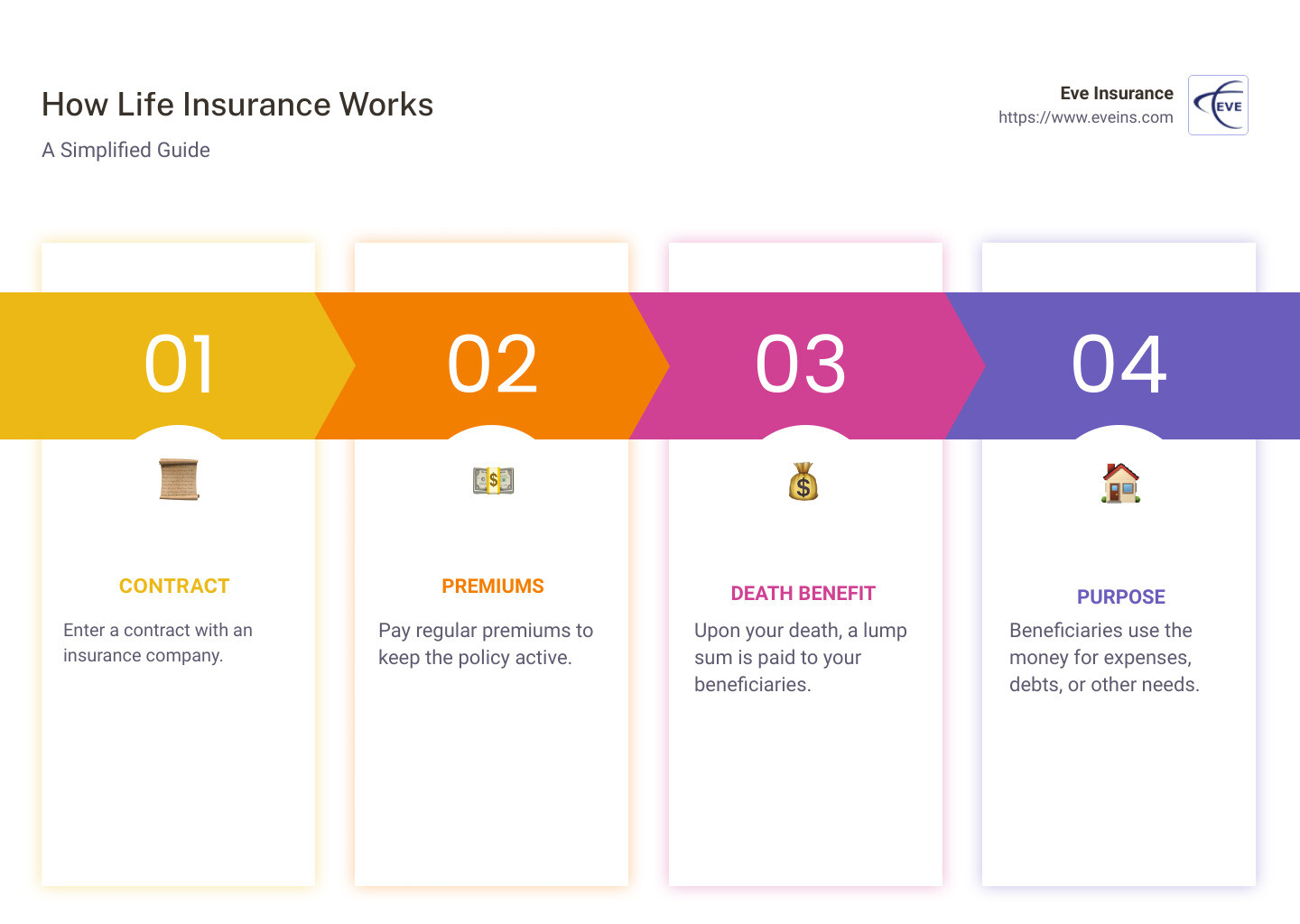
How does life insurance work? It’s simple. Life insurance is a safety net that provides financial security to your loved ones after you pass away. Here’s a quick breakdown:
- Contract: You enter into a contract with an insurance company.
- Premiums: You pay regular premiums to keep the policy active.
- Death Benefit: Upon your death, the insurance company pays a lump sum to your beneficiaries.
- Purpose: Beneficiaries can use this money for living expenses, debts, or any other financial needs.
With life insurance, you can ensure that your family won’t face financial hardship when you’re gone. At Eve Insurance, our mission is to offer tailored insurance solutions to provide peace of mind and financial stability for homeowners.
I’m Greg Eve, as a seasoned life agent, I’ve helped countless clients understand how life insurance works and crafted policies that protect their dreams and families.
What is Life Insurance?
Life insurance is a contract between you (the policyholder) and an insurance company. In return for regular payments, known as premiums, the insurance company promises to pay a lump sum, called the death benefit, to your chosen beneficiaries when you pass away.
Types of Life Insurance
Life insurance comes in various forms, but the two main categories are term life and permanent life insurance. Let’s break these down.
Term Life Insurance
Term life insurance provides coverage for a specific period, like 10, 20, or 30 years. If you pass away during this term, your beneficiaries receive the death benefit. If you outlive the term, the policy simply expires, and no benefits are paid out. This type is often more affordable for families on a budget.
Permanent Life Insurance
Unlike term life, permanent life insurance covers you for your entire life, as long as you continue to pay your premiums. There are three common types:
- Whole Life Insurance: Offers a fixed death benefit and fixed premiums. A portion of your premium goes into a savings component called cash value, which grows over time. You can even borrow against this cash value if needed.
- Universal Life Insurance: Provides more flexibility than whole life. You can adjust your premiums and death benefit within certain limits. It also builds cash value, but the interest rate may vary.
- Variable Life Insurance: Similar to universal life but allows you to invest the cash value in various sub-accounts, like stocks and bonds. This offers higher growth potential but also comes with higher risk.
Real-Life Example
Imagine Sarah, a 35-year-old mother of two, who buys a 20-year term life policy. She pays a monthly premium of $30. If she passes away within those 20 years, her children receive $500,000. If she lives beyond the term, the policy expires, and no payout is made.
On the other hand, John, a 40-year-old businessman, opts for a whole life policy. He pays a higher premium of $200 per month, but he knows his family will receive a guaranteed death benefit whenever he passes away. Plus, he can borrow against the policy’s cash value if he needs funds for emergencies.
Understanding these types of life insurance can help you make an informed decision that best suits your needs and budget. Up next, we’ll dive into how life insurance actually works to provide that crucial financial safety net for your loved ones.
How Does Life Insurance Work?
Life insurance is a financial safety net for your loved ones. When you buy a policy, you make premium payments to an insurance company. In return, the company promises to pay a lump sum, known as a death benefit, to your beneficiaries if you pass away while the policy is active.
Term Life Insurance
Term life insurance is straightforward and often the most affordable option. Here’s how it works:
- Coverage Period: You choose a term, like 10, 20, or 30 years.
- Premium Payments: You pay regular premiums, usually monthly or annually.
- Expiration: If you outlive the term, the policy expires. No death benefit is paid.
- Affordability: Term life is generally cheaper than permanent life insurance because it covers a set period.
For example, John, a 35-year-old non-smoker, might pay $30 per month for a 20-year term life policy with a $500,000 death benefit. If John dies within those 20 years, his beneficiaries receive the $500,000. If he lives past the term, the policy ends, and no benefit is paid.
Permanent Life Insurance
Permanent life insurance offers lifetime coverage and includes a cash value component. There are three main types:
- Whole Life Insurance
- Lifetime Coverage: The policy remains active as long as you pay the premiums.
- Cash Value: Part of your premium goes into a savings account that grows over time.
- Premiums: Higher than term life but fixed for the life of the policy.
- Universal Life Insurance
- Flexible Premiums: You can adjust your premium payments and death benefit.
- Cash Value: Earns interest and can be used to pay premiums.
- Lifetime Coverage: Like whole life, it lasts your entire life.
- Variable Life Insurance
- Investment Component: Your cash value is invested in various subaccounts, like stocks and bonds.
- Potential for Higher Returns: But also higher risk.
- Lifetime Coverage: As long as premiums are paid.
Consider Jane, who buys a universal life insurance policy. She pays $200 per month, and over time, her policy builds a cash value. If she faces a financial emergency, she can borrow against this cash value. Unlike term life, her coverage doesn’t expire, providing her family with a guaranteed death benefit whenever she passes away.
Understanding the specifics of term life and permanent life insurance can help you decide which type of policy fits your needs and budget. Next, we’ll explore the benefits of having life insurance and why it’s a crucial part of financial planning.
Benefits of Life Insurance
Living Benefits
Life insurance isn’t just about providing for your loved ones after you’re gone. It also offers several living benefits that can support you financially while you’re still alive. Here’s why having life insurance can be a smart move:
Financial Support: Life insurance can provide a financial safety net for your family. If something happens to you, the death benefit can cover everyday expenses, mortgage payments, and even your children’s education.
Income Replacement: If you are the primary breadwinner, your family might struggle without your income. Life insurance can replace your income, ensuring your loved ones maintain their standard of living.
Debt Coverage: The death benefit can also be used to pay off personal debts like student loans, credit card bills, and medical expenses. This can prevent your family from inheriting your financial burdens.
Inheritance: Even if you don’t have significant assets, a life insurance policy can create an inheritance for your heirs. By naming them as beneficiaries, you ensure they receive financial support when you pass away.
Charitable Donations: Life insurance can also be a way to make a significant charitable contribution. By naming a charity as a beneficiary, you can leave a lasting legacy that supports causes you care about.
Cash Value: Some life insurance policies, like whole or universal life, build a cash value over time. This cash value can be a valuable asset, growing tax-deferred and offering a source of funds you can tap into if needed.
Borrowing: You can borrow against the cash value of your policy for various needs, such as funding a child’s education or making a down payment on a home. Just remember that any loans not repaid will reduce the death benefit.
Investment Component: Permanent life insurance policies often come with an investment component. The cash value can grow based on the performance of the investments, providing an additional way to build wealth.
Living Benefit Rider: Some policies include a living benefit rider, which allows you to access a portion of the death benefit if you’re diagnosed with a terminal, chronic, or critical illness. This can help cover medical expenses and improve your quality of life during difficult times.
Understanding these living benefits can help you see why life insurance is more than just a safety net for your family—it’s also a flexible financial tool that can support you throughout your life.
Next, we’ll look at how to choose the right life insurance policy to meet your specific needs and budget.
How to Choose the Right Life Insurance Policy
Factors Affecting Life Insurance Costs
Choosing the right life insurance policy involves understanding several key factors that affect costs and coverage. Here’s a breakdown to help you make an informed decision.
Coverage Needs
First, determine how much coverage you need. Think about your family’s financial needs, debts, and future expenses. For instance, consider mortgage payments, college tuition, and daily living costs. Many experts recommend a coverage amount that is at least 10-15 times your annual income.
Budget
Your budget plays a crucial role in selecting a policy. Term life insurance is usually more affordable, making it a good option if you’re on a tight budget. Permanent life insurance policies, like whole life or universal life, are more expensive but offer lifetime coverage and cash value accumulation.
Policy Riders
Policy riders are additional benefits you can add to your life insurance policy. Common riders include:
- Accidental Death Benefit Rider: Pays an additional amount if you die in an accident.
- Waiver of Premium Rider: Waives your premium payments if you become disabled.
- Living Benefits Rider: Allows you to access a portion of the death benefit if diagnosed with a terminal illness.
Quote Comparisons
It’s essential to compare quotes from different insurance companies. Prices can vary significantly, so shopping around can save you money. Look for policies that offer the best combination of coverage and premium cost.
Age
Age is a significant factor in determining life insurance premiums. The younger you are, the lower your premiums will be. This is because younger individuals are generally at lower risk of dying soon.
Health
Your health status also impacts your premium. Healthier individuals receive better rates. Insurers may require a medical exam to assess your health, looking at factors like weight, blood pressure, and cholesterol levels.
Occupation
Certain occupations carry higher risks and can lead to higher premiums. For example, construction workers and law enforcement officers may pay more due to the increased risk of fatal injuries.
Lifestyle
Your lifestyle choices can affect your premiums. Engaging in high-risk activities like skydiving or scuba diving can increase your costs. Insurers assess these risks to determine your premium rates.
Smoking
Smoking significantly raises your premium. Smokers are at higher risk for numerous health issues, leading to higher life insurance costs. Quitting smoking can lower your premiums over time.
Gender
Historically, men pay higher premiums than women. This is because men generally have a shorter life expectancy. However, this difference can vary between insurance companies.
By considering these factors, you can choose a life insurance policy that fits your needs and budget. Next, we’ll address some frequently asked questions to further clarify how life insurance works.
Frequently Asked Questions about Life Insurance
How long do you have to have life insurance before it pays out?
Life insurance can pay out as soon as it’s in force with the first premium payment. This means that if the insured person dies after the policy is active, the death benefit will be paid to the beneficiaries. However, some policies offer a binder option during the underwriting process. This means a certain amount of coverage is in place while the application is being reviewed. If the insured dies during this period, the binder coverage will be paid out.
Can you cash out life insurance before death?
Yes, certain types of permanent life insurance policies, like whole life and universal life, allow you to access the cash value before death. These policies build cash value over time, which can be borrowed against or withdrawn. Borrowing against your policy means you are taking a loan, and the death benefit acts as collateral. If you don’t repay the loan, the death benefit will be reduced by the amount borrowed, plus any interest.
Does life insurance actually pay out?
Yes, life insurance does pay out. When the insured person dies, the beneficiaries must file a claim with the life insurance company. This involves submitting a death certificate and any required forms. Once the claim is processed, the beneficiaries receive the death benefit. This payout is usually tax-free.
Beneficiaries can choose how they want to receive the payout. Options include a lump-sum payment, installments, or an annuity. Each option has its pros and cons, so it’s important to consider which is best for your situation.
For more detailed information, you can read about the payout options available.
Conclusion
Life insurance is more than just a financial product; it’s a crucial part of financial planning that offers peace of mind. By ensuring that your loved ones are taken care of financially if something happens to you, life insurance helps maintain their quality of life and covers essential expenses like mortgages, education, and everyday living costs.
At Eve Insurance, we understand that every family and individual has unique needs. That’s why we offer tailored coverage options to fit your specific situation. Whether you’re looking for term life insurance to cover a specific period or permanent life insurance for lifetime protection, we have policies designed to meet your goals.
Moreover, our commitment goes beyond just providing insurance. We are deeply involved in the community, offering support and resources to help you make informed decisions about your financial future. Our team is always here to guide you through the process, ensuring you choose the best policy for your needs.
Investing in life insurance is not just about safeguarding your family’s future—it’s about giving yourself peace of mind today. Knowing that your loved ones will be financially secure allows you to focus on living your life to the fullest.
For more information on how to find the right life insurance policy for you, visit our Life Insurance page. Let us help you provide a secure future for your loved ones.
By keeping it simple and direct, we hope this section provides a clear and concise conclusion to your understanding of how life insurance works and why it is essential.