

Estimating Homeowners Insurance: The Ultimate Calculator Guide
Understanding how to estimate your homeowners insurance costs is essential for protecting your home and financial stability. A homeowners insurance calculator is a fast and simple way to get an estimate of home insurance costs. By inputting a few key details about your property and personal situation, such as dwelling coverage, personal property coverage, and more, you can quickly get an idea of what your insurance premiums might be.
Quick overview:
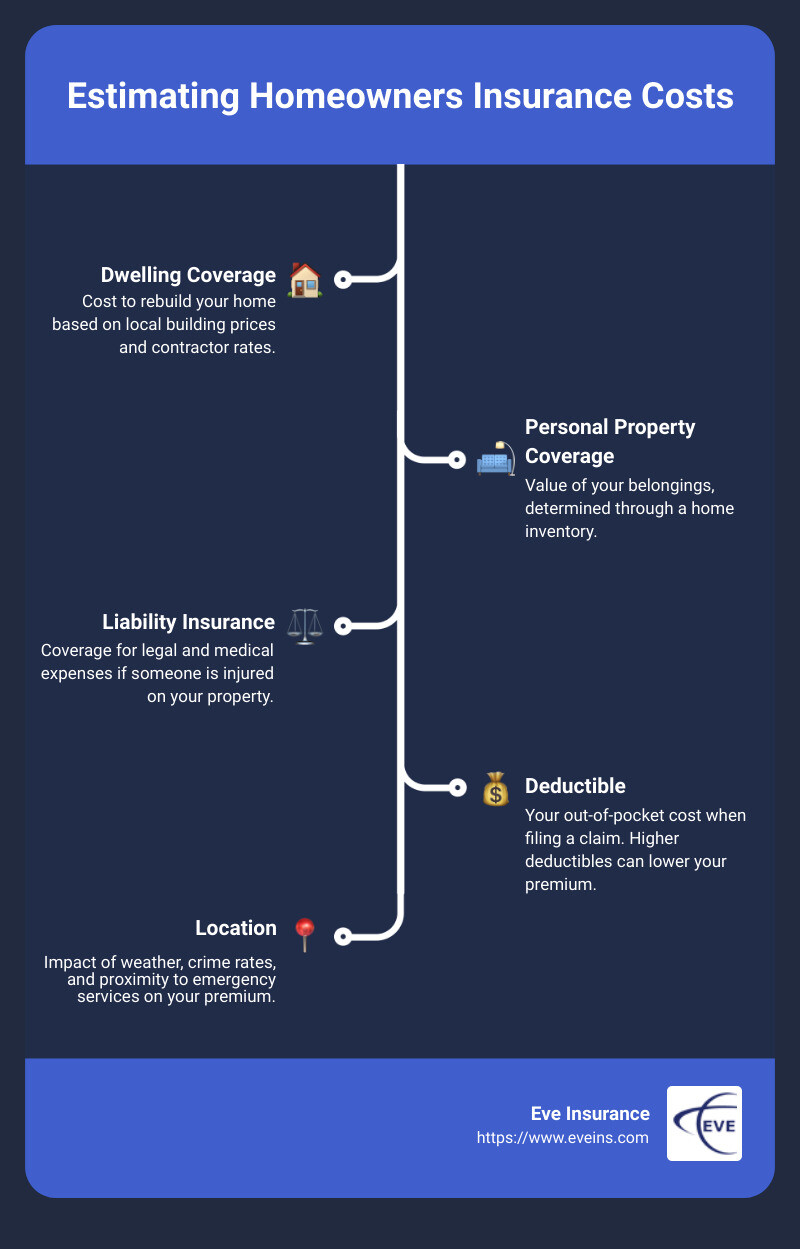
- Dwelling Coverage: Cost to rebuild your home.
- Personal Property Coverage: Value of your belongings.
- Liability Insurance: Coverage for injuries or damages caused to others.
- Deductible: Your out-of-pocket cost when filing a claim.
- Location: Impact of weather, crime rates, and emergency service proximity.
Using a homeowners insurance calculator is easy, and it helps you find the best policy tailored to your needs. It’s a great step towards ensuring you’re adequately covered without overspending.
I’m Greg Eve, and I’ve spent years assisting homeowners in safeguarding their properties. A client once called us “Dream Protectors,” and I can’t think of a better purpose. My mission is to simplify homeowners insurance calculations so you can confidently choose the coverage that’s right for you.
Find out how to get started with our guide below.
How to Calculate Homeowners Insurance
Dwelling Coverage
Dwelling coverage is the backbone of your homeowners insurance. It covers the cost to rebuild or repair your house if it’s damaged by covered perils like fire or tornadoes. The key is to ensure you have enough coverage to rebuild your home from the ground up.
How to Determine the Cost to Rebuild:
- Consult Local Contractors: They can provide an accurate estimate of rebuilding costs based on local rates for materials and labor.
- Extended Replacement Cost: This coverage offers a specific percentage (like 25%) over your dwelling coverage if rebuilding costs exceed expectations.
- Guaranteed Replacement Cost: This type of coverage pays whatever it costs to rebuild your home, regardless of the limit.
Personal Property Coverage
Personal property coverage protects your belongings—furniture, appliances, clothing—if they’re damaged or destroyed by a covered event.
Steps to Determine Coverage:
- Create a Home Inventory: List all your belongings and their current values. This helps in determining the amount of coverage you need.
- Replacement Cost vs. Actual Cash Value: Replacement cost coverage reimburses you for the cost of new items, while actual cash value takes depreciation into account.
Liability Insurance
Liability insurance covers legal and medical expenses if someone is injured on your property or if you accidentally cause damage to someone else’s property.
Coverage Considerations:
- Legal Expenses: Covers attorney fees and court costs if you’re sued.
- Medical Expenses: Covers medical bills if someone is injured on your property.
- Umbrella Policy: Provides additional liability coverage beyond your standard policy limits.
Choosing a Deductible
An insurance deductible is the amount you pay out-of-pocket before your insurance kicks in. Choosing the right deductible can significantly impact your premiums and claim payouts.
Key Points:
- Deductible Amount: Common choices range from $500 to $2,000. A higher deductible usually means lower premiums.
- Claim Payout: The deductible is subtracted from your claim payout. For example, if you have a $1,000 deductible and a $5,000 claim, you’ll receive $4,000.
- Higher Deductible Savings: Opting for a higher deductible can save you money on premiums, but be sure you can afford the out-of-pocket cost if you need to file a claim.
Using these guidelines, you can get a clear picture of how to calculate your homeowners insurance needs. Up next, we’ll explore the various factors that influence your home insurance rates, including location, home characteristics, and past claims history.
Factors Influencing Home Insurance Rates
Several factors influence your home insurance rates. Knowing these can help you understand why your premiums are set at a certain level and how you might lower them.
Location
ZIP Code: Your ZIP code significantly impacts your insurance rates. Insurers look at the risks associated with your area, such as weather events and crime rates. For example, homes closer to the coast in Michigan might face higher premiums due to increased flood and hurricane risks.
Weather Risks: Areas prone to natural disasters like floods, tornadoes, or wildfires often have higher insurance costs. The National Centers for Environmental Information recorded 60 natural disasters over the past three years, each causing over $1 billion in damage.
Crime Rates: Higher crime rates in your area can lead to increased premiums. Insurance companies factor in the likelihood of theft or vandalism when setting rates.
Proximity to Emergency Services: Homes near fire stations and hydrants generally cost less to insure. Quick response times can reduce damage and, consequently, claims costs.
Home Characteristics
Age: Older homes may cost more to insure due to outdated plumbing, wiring, and structural issues. Renovations to meet modern codes can help lower premiums.
Square Footage: Larger homes usually require more insurance coverage, leading to higher premiums.
Roof Age: The condition and age of your roof are critical. Newer roofs often qualify for discounts due to better resistance to weather damage. Some providers may even refuse to insure homes with roofs over 20 years old.
Building Materials: Homes built with fire-resistant materials like brick or metal may receive lower premiums. Conversely, homes with unique features like cedar shingles or antique woodwork might cost more to insure due to higher replacement values.
Condition: Well-maintained homes are less risky to insure. Regular updates and repairs can make a significant difference in your rates.
Past Claims History
Claims Frequency: If you’ve filed multiple claims in the past, insurers may view you as a higher risk, leading to higher premiums. It’s essential to consider whether filing a small claim is worth the potential rate increase.
Property Claims History: The claims history of your property can also affect your rates. A home with a history of frequent claims might be seen as more prone to issues, even if you weren’t the owner at the time.
Credit Score
Credit-Based Insurance Score: Most insurers use a credit-based insurance score to help determine your premiums. Studies show that people with lower credit scores tend to file more claims. As a result, those with poor credit often pay higher premiums.
Federal Trade Commission Study: According to the Federal Trade Commission, using credit scores in insurance rating is a valid predictor of risk. States like California, Hawaii, Maryland, and Massachusetts do not allow credit scores to be used in setting insurance rates, but in Michigan, your credit score will likely be a factor.
Understanding these factors can empower you to make informed decisions about your homeowners insurance. Next, we’ll dive into how to use a homeowners insurance calculator to estimate your coverage needs and costs.
Using a Homeowners Insurance Calculator
Using a homeowners insurance calculator can give you a quick and accurate estimate of your insurance needs and costs. Here’s the essential information you need to input:
- Home Address: Your ZIP code helps insurers assess risk factors like weather and crime rates.
- Property Type: Specify if it’s a single-family home, duplex, or multi-family unit.
- Year Built: Older homes may have higher insurance premiums due to outdated systems.
- Square Footage: Larger homes generally cost more to insure.
- Roof Type: The age and material of your roof impact insurance rates.
- Foundation Type: Slab, basement, or crawl space can affect rebuild costs.
- Safety Devices: List any smoke alarms, burglar alarms, or water-leak detection systems.
- Current Insurance: Provide details about your existing homeowners insurance policy.
Benefits of Using a Calculator
A homeowners insurance calculator offers several advantages:
- Quick Estimates: Get immediate estimates without lengthy phone calls or meetings.
- Comparison: Easily compare quotes from multiple insurers to find the best rate.
- Tailored Coverage: Adjust coverage levels to fit your specific needs and budget.
By using online tools, you can streamline the process and ensure you’re getting the most accurate and competitive quotes. This helps you make informed decisions about your homeowners insurance, saving both time and money.
Average Homeowners Insurance Costs
National and State Averages
Understanding the average cost of homeowners insurance can help you budget and make informed decisions. The national average cost of homeowners insurance is approximately $2,230 per year for a policy with $300,000 in dwelling coverage. However, this figure can vary significantly based on factors like location, home characteristics, and coverage levels.
State Variations
Homeowners insurance costs can vary widely from state to state. For example, states like Nebraska, Oklahoma, and Kansas are among the most expensive, primarily due to weather-related risks such as tornadoes and hailstorms. On the other hand, states like Vermont, New Hampshire, and Delaware have some of the lowest average costs, largely due to fewer natural disasters.
Here’s a quick look at the average annual premiums in some states:
- Nebraska: $3,957
- Oklahoma: $3,528
- Kansas: $2,767
- Vermont: $844
- New Hampshire: $905
- Delaware: $736
Average Costs by Coverage Level
When determining your homeowners insurance, it’s essential to consider the different types of coverage and their associated costs. Here’s a breakdown:
Dwelling Coverage
Dwelling coverage is the cornerstone of your policy, covering the cost to rebuild your home. The average cost for $300,000 in dwelling coverage is around $2,230 per year. However, the actual cost can vary based on the local cost of building materials and labor.
Personal Property Coverage
Personal property coverage protects your belongings like furniture, electronics, and clothing. Typically, this coverage is set at 50% to 70% of your dwelling limit. For example, if your dwelling coverage is $300,000, your personal property coverage could range from $150,000 to $210,000.
Liability Insurance
Liability insurance covers legal and medical expenses if someone is injured on your property. The standard coverage starts at $100,000 but can go higher based on your needs. The cost for this coverage is typically included in your overall premium, but increasing your liability limit will also increase your premium.
Medical Expenses
Medical payments coverage is a smaller part of your policy, usually between $1,000 and $5,000. This covers minor medical expenses for injuries that occur on your property, regardless of fault.
Company Averages
Different insurance companies offer various rates, even for the same coverage levels. According to research, companies like Erie, Auto-Owners, and USAA often provide some of the lowest average home insurance rates for $300,000 in dwelling coverage.
Natural Disaster Risk
Natural disasters significantly impact insurance rates. States prone to hurricanes, earthquakes, or wildfires generally have higher premiums. For example, Florida has an average annual premium of $2,055 due to its high risk of hurricanes.
In the next section, we’ll address some frequently asked questions about homeowners insurance calculators, helping you understand how to estimate your insurance needs accurately.
Frequently Asked Questions about Homeowners Insurance Calculators
How do you calculate how much homeowners insurance you need?
Calculating how much homeowners insurance you need involves several factors:
- Square footage: Multiply your home’s square footage by the average building cost per square foot in your area. This gives you a rough estimate of the rebuild cost.
- Local building costs: These costs can vary, so check with local contractors or use online resources to get an accurate figure.
- Replacement cost: This is the cost to rebuild your home from the ground up at today’s prices. It includes labor and materials and should be as accurate as possible.
- Home characteristics: Consider the age, condition, and materials used in your home. Older homes or those with unique features may cost more to rebuild.

What is the 80% rule in homeowners insurance?
The 80% rule states that your insurance should cover at least 80% of your home’s replacement cost. If you’re underinsured and a loss occurs, you may face penalties and have to pay a larger portion of the repair costs out of pocket.
For example, if your home’s replacement cost is $400,000, you should have at least $320,000 in coverage to avoid penalties. If you only have $300,000 in coverage, your insurer might only cover a portion of the loss.
How is homeowners insurance premium calculated?
Several factors influence your homeowners insurance premium:
- State: Insurance rates vary by state due to different risks and regulations. For instance, states prone to natural disasters often have higher premiums.
- Credit score: Insurers use a credit-based insurance score to assess risk. A higher score can lead to lower premiums.
- Claims history: Frequent claims can increase your premium. Insurers view a history of claims as an indicator of future risk.
- Home characteristics: The age, square footage, roof type, and building materials of your home all impact your premium. Newer homes or those with modern safety features may have lower premiums.

By understanding these factors, you can better estimate your homeowners insurance needs and make informed decisions about your coverage.
Conclusion
Estimating your homeowners insurance accurately is crucial for protecting your home and belongings. By understanding the various factors—like dwelling coverage, personal property coverage, and liability insurance—you can make informed decisions. Using a homeowners insurance calculator simplifies this process, providing quick and tailored estimates.
Accurate estimates help you ensure you have sufficient coverage in case of unexpected events like fires or natural disasters. They also prevent you from overpaying for insurance you don’t need.
At Eve Insurance, we offer personalized coverage options to fit your specific needs. Our goal is to help you protect your investment without breaking the bank.
Get started today with our tools and expert advice to find the best homeowners insurance for your situation. Accurate estimates and tailored coverage can give you peace of mind, knowing your home is well-protected.