Golf cart insurance is essential for protecting your ride on and off the course. Whether you’re cruising through your neighborhood or zipping around your favorite golf course, having the right insurance ensures that you’re covered against accidents, theft, and unexpected damage.
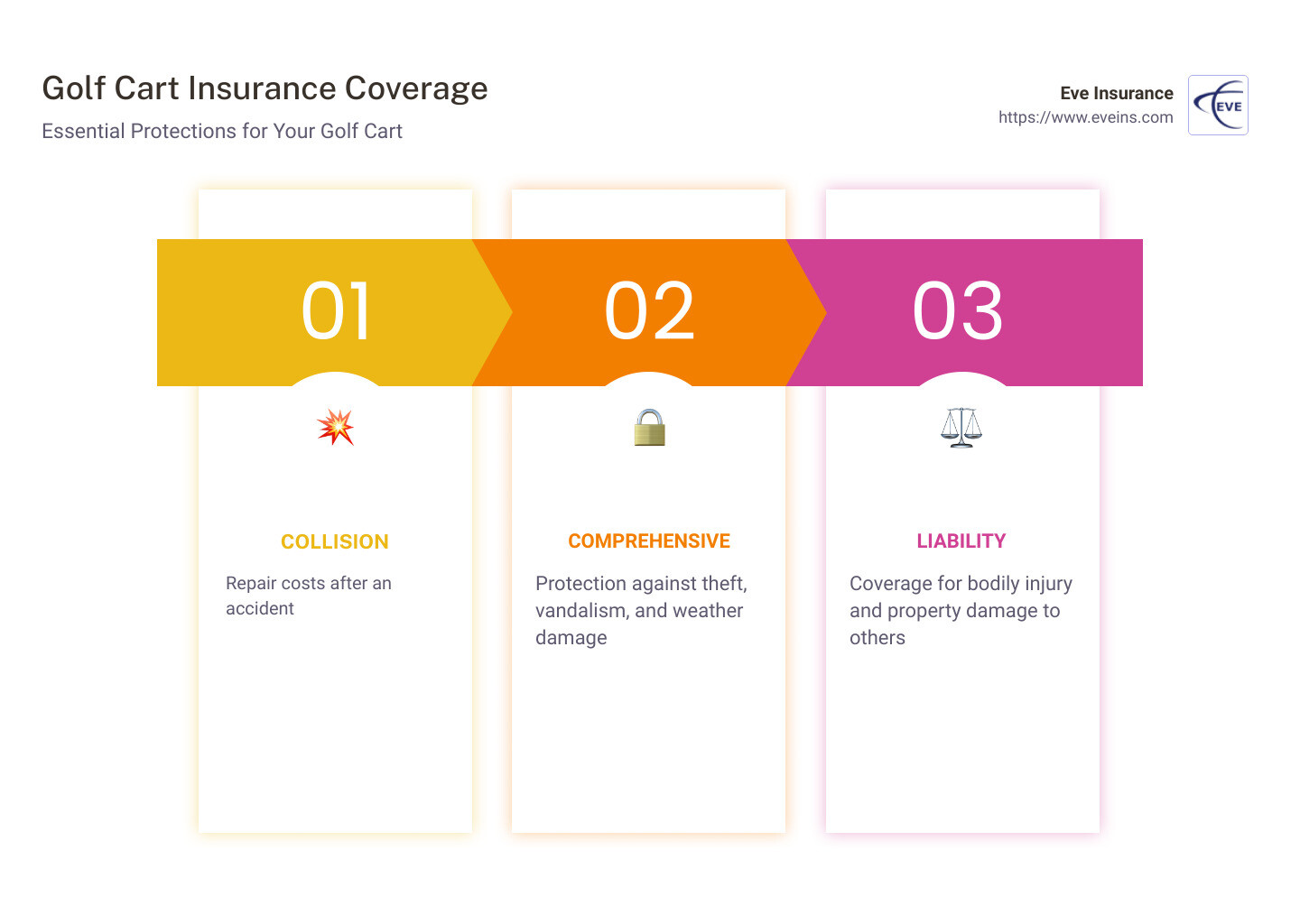
Here’s a quick overview of what golf cart insurance covers:
- Collision: Repair costs after an accident
- Comprehensive: Protection against theft, vandalism, and weather damage
- Liability: Coverage for bodily injury and property damage to others
- Medical Payments: Medical bills for you and your passengers
- Uninsured Motorist: Protection if you’re hit by an uninsured driver
Golf carts are becoming increasingly popular for their convenience and ease of use. However, they also come with a unique set of risks. Michigan has unpredictable weather, which can damage your golf cart. Plus, accidents on public roads can lead to hefty repair bills. Eve Insurance provides comprehensive golf cart insurance to keep you financially secure.
I’m Greg Eve, and I have years of experience helping clients navigate the intricacies of golf cart insurance.
What is Golf Cart Insurance?
Golf cart insurance is a specialized type of insurance designed to protect your golf cart from various risks and liabilities, both on and off the course. Whether you use your golf cart for golfing, around your property, or even on public roads, having the right insurance is crucial for financial security and peace of mind.
Definition
Golf cart insurance is a policy that offers coverage for golf carts, similar to what auto insurance provides for cars. This type of insurance can include various coverages such as liability, collision, comprehensive, uninsured motorist, medical payments, and accessory coverage.
Purpose
The primary purpose of golf cart insurance is to protect you financially if something goes wrong while you’re using your golf cart. This could include accidents, theft, vandalism, or damage from natural disasters. Without proper coverage, you could end up paying hefty repair bills or medical expenses out of pocket.
Coverage Types
Golf cart insurance typically includes several types of coverage to ensure comprehensive protection:
- Liability Coverage: Covers bodily injury and property damage you may cause to others while operating your golf cart. It can also cover legal fees if you’re sued.
- Collision Coverage: Pays for repairs or replacement if your golf cart is damaged in an accident, regardless of who is at fault.
- Comprehensive Coverage: Covers damage from non-collision events like theft, vandalism, fire, and weather-related incidents.
- Uninsured Motorist Coverage: Protects you and your passengers if you’re involved in an accident with an uninsured or underinsured driver.
- Medical Payments Coverage: Helps cover hospital bills if you or your passengers are injured in a golf cart accident. This is especially important if you don’t have adequate health insurance.
- Accessory Coverage: Provides additional protection for custom upgrades and high-performance parts added to your golf cart.
Having a tailored golf cart insurance policy ensures you’re covered for various scenarios, whether you’re cruising around the golf course or driving through your neighborhood. Eve Insurance offers comprehensive golf cart insurance policies to fit your specific needs, giving you the freedom to enjoy your ride without worry.
Types of Golf Cart Insurance Coverage
When it comes to protecting your golf cart, there are several types of coverage to consider. Each type addresses different risks and scenarios. Here’s a breakdown of the main types of golf cart insurance coverage:
Liability Coverage
Liability coverage is essential for any golf cart owner. It protects you if you cause bodily injury or property damage while operating your golf cart. For example, if you accidentally hit a parked car or injure someone, liability coverage will help pay for the medical expenses and repair costs. This coverage also includes legal fees if you’re sued over an accident.
Collision Coverage
Collision coverage pays for damage to your golf cart resulting from an accident. Whether you collide with another vehicle, a tree, or any other object, this coverage will help cover the repair or replacement costs. For instance, if you’re driving on a public road and get into an accident, collision coverage ensures that repair costs don’t come out of your pocket.
Comprehensive Coverage
Comprehensive coverage protects your golf cart from non-collision-related incidents. This includes theft, vandalism, fire, and weather damage. Imagine waking up to find your golf cart missing or damaged by a hurricane. Comprehensive coverage ensures that you’re not left with a hefty bill for repairs or replacement.
Uninsured Motorist Coverage
Uninsured motorist coverage is crucial for protecting you and your passengers if you’re involved in an accident with an uninsured or underinsured driver. This coverage helps pay for medical expenses and other costs when the at-fault driver doesn’t have enough insurance to cover the damages.
Medical Payments Coverage
Medical payments coverage helps pay for hospital bills and other medical expenses if you or your passengers are injured in a golf cart accident. This optional coverage ensures that you can focus on recovery without worrying about medical costs.
Accessory Coverage
If you’ve added custom upgrades or high-performance parts to your golf cart, accessory coverage is a must. This coverage provides additional protection for these enhancements, ensuring that their value is included in your policy. For example, if you’ve installed a high-end sound system or custom wheels, accessory coverage will help cover the cost of repairs or replacement if they’re damaged.
By understanding these different types of golf cart insurance coverage, you can choose the right policy to protect your investment and ensure peace of mind. Next, we’ll discuss the factors that influence the cost of golf cart insurance.
Factors Influencing Golf Cart Insurance Costs
When it comes to golf cart insurance, several factors can influence your premiums. Let’s break down the key elements: age and driving history, modifications and upgrades, and usage and storage.
Age and Driving History
Your age and driving history play a significant role in determining your insurance costs. Younger drivers often face higher premiums because they are statistically more likely to be involved in accidents.
Traffic violations and accidents on your record can also increase your insurance rates. For example, if you have a history of speeding tickets or collisions, insurers may see you as a higher risk and charge more for coverage.
On the flip side, maintaining a clean driving record can help keep your insurance costs manageable. Many insurance providers offer discounts for drivers with no recent violations or accidents.
Modifications and Upgrades
Customizing your golf cart with high-performance parts or expensive accessories can impact its value and, consequently, your insurance premiums. For example, if you add custom wheels, a high-end sound system, or other upgrades, your golf cart becomes more valuable and more expensive to insure.
It’s crucial to notify your insurance provider about any modifications. Not doing so could result in inadequate coverage if you need to file a claim.
Usage and Storage
How and where you use your golf cart significantly affects your insurance rates. If you use your golf cart for off-roading or drive it on public roads, you may face higher premiums compared to someone who uses their cart solely on private property.
Where you store your golf cart when not in use also matters. Keeping it in a secure garage or storage facility can lower your insurance costs. Conversely, storing it outdoors or in an area prone to theft or weather damage may result in higher premiums.
By understanding these factors, you can make informed decisions to manage your insurance costs effectively.
Legal Requirements for Golf Cart Insurance in Michigan
Operator Qualifications
In Michigan, operating a golf cart on public roads comes with specific legal requirements to ensure safety and compliance. First and foremost, golf cart operators must possess a valid driver’s license. This requirement guarantees that the individual has a basic understanding of traffic laws and the skills needed to navigate safely.
The state also mandates that operators be at least 16 years old. This age requirement ensures a certain level of maturity and experience behind the wheel, reducing the risk of accidents. Additionally, operators must adhere to all local traffic laws, including obeying speed limits, yielding to pedestrians, and stopping at traffic signals and stop signs. These rules help create a safer environment for all road users.
Required Features
Michigan law specifies that golf carts must be equipped with certain features to ensure visibility and safety, especially when sharing the road with other vehicles. These required features include:
- Headlights: Essential for visibility during low-light conditions or nighttime driving.
- Taillights: Help other drivers see your golf cart from behind, reducing the risk of rear-end collisions.
- Turn Signals: Indicate your intentions to turn or change lanes, making your movements predictable to other drivers.
- Rearview Mirror: Provides a clear view of the road behind you, essential for safe lane changes and reversing.
These features are not just for compliance but significantly enhance the safety of operating a golf cart on public roads. For example, having headlights and taillights ensures that other drivers can see your golf cart, reducing the risk of accidents during poor visibility conditions.
By understanding and adhering to these legal requirements, you can enjoy your golf cart safely and legally in Michigan. Up next, we’ll discuss how to choose the right golf cart insurance policy to meet your needs.
How to Choose the Right Golf Cart Insurance Policy
Selecting the right golf cart insurance policy can feel overwhelming, but breaking it down into simple steps can help. Here’s how you can make an informed decision.
Evaluating Your Needs
First, consider how you plan to use your golf cart.
- Intended Use: Do you drive your golf cart on public roads, or is it only for private property? Public road use generally requires more coverage.
- Cart Value: What is the value of your golf cart? If you have a high-end model or have made custom upgrades, you’ll want to ensure your policy covers its full value.
- Protection Level: How much risk are you willing to take on? Higher coverage limits provide more protection but come with higher premiums.
Comparing Insurance Providers
Once you know what you need, it’s time to shop around.
- Reputable Companies: Look for established insurance companies with experience in golf cart coverage. Ensure that the company you choose is known for its reliable service and customer satisfaction.
- Customer Reviews: Check online reviews to see what other policyholders have to say. Look for feedback on customer service, claim handling, and overall satisfaction.
- Policy Offerings: Compare the types of coverage each company offers. Consider if they include extras like roadside assistance, which could be beneficial.
Understanding Policy Terms
Before you finalize your decision, make sure you understand the details of the policy.
- Coverage Limits: This is the maximum amount your insurance will pay for a covered claim. Make sure the limits are high enough to cover potential losses.
- Deductibles: This is the amount you’ll pay out-of-pocket before your insurance kicks in. Higher deductibles can lower your premium but mean more out-of-pocket costs in the event of a claim.
- Exclusions: Read the fine print to know what is not covered. Common exclusions might include certain types of damage or specific activities like off-roading.
By carefully evaluating your needs, comparing providers, and understanding policy terms, you can select the right golf cart insurance policy that offers the protection you need at a price you can afford. Up next, we’ll address some frequently asked questions about golf cart insurance to help you further in your decision-making process.
Frequently Asked Questions about Golf Cart Insurance
Is it worth insuring a golf cart?
Absolutely. Golf cart insurance is essential if you use your golf cart beyond the golf course. Whether you’re driving on public roads, using it for off-roading, or simply storing it outside, accidents and damage can happen.
Consider this: in South Carolina, weather can be unpredictable with heavy rainstorms and hurricanes. Imagine finding your golf cart damaged by a fallen tree or even stolen. Without comprehensive coverage, you would bear the full cost of repairs or replacement.
Does an umbrella policy cover a golf cart?
An umbrella policy can extend your liability coverage, but it won’t cover everything. For instance, most umbrella policies tied to a homeowners or auto policy will only cover business activities or business property if they are included in your basic policies. Always check the definitions and exclusions in your policy or ask your agent for clarity.
How to put insurance on a golf cart?
To get golf cart insurance, follow these steps:
- Identify Your Needs: Determine how you use your golf cart. Are you driving it on public roads, or is it strictly for private property? This will influence the type of coverage you need.
- Gather Information: You’ll need details like the golf cart’s serial number or VIN. If your cart doesn’t have a VIN, locate the serial number on the frame.
- Contact Insurers: Reach out to reputable insurance companies. Companies like State Farm, Progressive, and USAA offer policies for golf carts. Some may even allow you to add the golf cart to your existing auto or home insurance policy through endorsements.
- Compare Quotes: Get quotes from multiple providers. For example, Progressive might offer a policy for as low as $77/year for liability or $300/year for full coverage with a $500 deductible.
- Review Policy Terms: Carefully read the terms, coverage limits, deductibles, and exclusions. Ensure the policy covers all your needs, including collision, comprehensive, and liability.
By taking these steps, you can secure a policy that protects your golf cart and ensures peace of mind.
Conclusion
In summary, golf cart insurance is essential for protecting your ride both on and off the course. Whether you’re cruising through your neighborhood or navigating a public road, having the right coverage can save you from significant financial burdens due to accidents, theft, or unexpected weather damage.
At Eve Insurance, we understand the unique risks associated with owning and operating a golf cart. Our comprehensive policies are designed to give you peace of mind, knowing that you and your golf cart are well-protected. We offer a range of coverage options, from liability to comprehensive, to suit your specific needs.
Choosing the right policy involves evaluating your needs, comparing providers, and understanding the terms and conditions. By doing so, you can ensure that you have adequate protection at an affordable price. A well-chosen insurance policy not only safeguards your investment but also provides you with the confidence to enjoy your golf cart without worries.
Secure your peace of mind today by exploring our off-road vehicle insurance options. Visit Eve Insurance to learn more and get a personalized quote.

By taking these steps, you can secure a policy that protects your golf cart and ensures peace of mind.