
Why Michigan’s No-Fault Car Insurance is Important

Does Michigan still have no-fault car insurance? Yes, Michigan continues to operate under a no-fault car insurance system.
Under Michigan’s no-fault insurance law, your own auto insurance company covers your medical bills and lost wages after a car accident, regardless of who was at fault. This system is designed to speed up the claims process and ensure that accident victims receive timely and adequate care without needing to sue the at-fault driver.
We’ll explain the key aspects of Michigan’s no-fault car insurance, highlight recent changes to the law, and provide practical advice for understanding your coverage options.
I’m Greg Eve, a seasoned auto insurance agent with experience in navigating Michigan’s no-fault insurance complexities. Let’s dive in to explore how this system works and what recent changes might mean for you.
What is No-Fault Car Insurance?
No-fault car insurance is a type of auto insurance policy where your own insurance company pays for certain expenses after an accident, regardless of who was at fault. This system was designed to ensure that accident victims receive timely and adequate care without needing to sue the at-fault driver.
Definition
In simple terms, no-fault car insurance means that if you’re involved in a car accident, your insurance company will cover your medical expenses, lost wages, and other related costs. You don’t need to wait for a legal decision on who was at fault to get the help you need.
Purpose
The primary purpose of no-fault insurance is to reduce the delays and legal battles that often come with determining fault in car accidents. Before Michigan adopted the no-fault system in 1973, victims had to go through lengthy legal processes to get compensated, often leading to financial hardships.
Benefits
The benefits of no-fault insurance are numerous:
- Quick Access to Medical Care: You can get immediate medical treatment without waiting for fault to be determined.
- Coverage for Lost Wages: If you’re unable to work due to your injuries, no-fault insurance will cover a portion of your lost income.
- Reduced Legal Hassles: You don’t have to sue the other driver to get compensation, which speeds up the entire process.
Coverage
Michigan’s no-fault insurance includes several key components:
- Personal Injury Protection (PIP): Covers medical expenses, lost wages, and rehabilitation costs for everyone in the accident, regardless of fault.
- Property Protection Insurance (PPI): Provides up to $1 million in property damage coverage for Michigan-registered vehicles.
- Residual Liability Insurance: Ensures that drivers carry specific levels of liability for property damage and bodily injury to others.
These components offer comprehensive protection, ensuring that you and your passengers are covered in various scenarios.

To sum up, Michigan’s no-fault car insurance aims to provide quick and fair compensation to accident victims, eliminating the need for lengthy legal battles and ensuring that everyone gets the help they need promptly.
Now, let’s delve into the recent changes to Michigan’s no-fault insurance law and how they impact your coverage options.
Recent Changes to Michigan’s No-Fault Insurance Law
Michigan’s no-fault car insurance law saw significant reforms in 2019, which took effect on July 1, 2020. These changes brought about new choices and responsibilities for drivers. Let’s break down what you need to know.
PIP Coverage Options
The biggest change is the introduction of a tiered system for Personal Injury Protection (PIP) coverage. Previously, Michigan drivers had mandatory comprehensive lifetime no-fault PIP coverage. Now, motorists can choose from several PIP coverage levels:
- No-Limit: This option provides unlimited lifetime coverage for medical expenses.
- $500,000: Covers up to $500,000 in medical expenses.
- $250,000: Covers up to $250,000 in medical expenses.
- $50,000: This is available only under specific circumstances, such as if the driver is on Medicaid.
- Opt-Out: Drivers on Medicare can opt out of PIP coverage altogether.
Impact on Medical and Rehabilitation Expenses
Under the old law, car crash victims had guaranteed lifetime coverage for medical and rehabilitation expenses. With the new tiered system, this is no longer automatic. Unless you choose the No-Limit option, your coverage will be capped based on the tier you select.
This change means increased financial risk. For example, if you choose the $250,000 PIP option and your medical bills exceed this amount, you will be responsible for the additional costs. It’s crucial to understand your medical needs and financial situation before making a decision.
Changes in Liability Coverage
The reforms also brought changes to liability coverage. Previously, Michigan’s no-fault system minimized the need to sue for damages. Now, drivers face increased liability for medical expenses they cause others to incur.
Here are some key points:
- Bodily Injury: The minimum required coverage for bodily injury has increased. This means higher financial risk if you’re at fault in an accident.
- Property Damage: The changes also affect property damage liability. You are now required to carry higher minimums, which could impact your premiums.
- Mini-Tort Claims: The mini-tort limit has increased to $3,000. This allows you to recover up to this amount for vehicle damage not covered by insurance.
These changes mean that understanding your liability coverage is more important than ever. If you’re unsure, consulting with an insurance expert or attorney can help you navigate these new requirements.
Next, we’ll explore how no-fault insurance works in Michigan and what you need to know about filing a car accident lawsuit.
Does Michigan Still Have No-Fault Car Insurance?
Yes, Michigan still operates under a no-fault car insurance system. This means that if you’re injured in a car accident, you will turn to your own insurance company for coverage, regardless of who caused the accident.
How No-Fault Insurance Works in Michigan
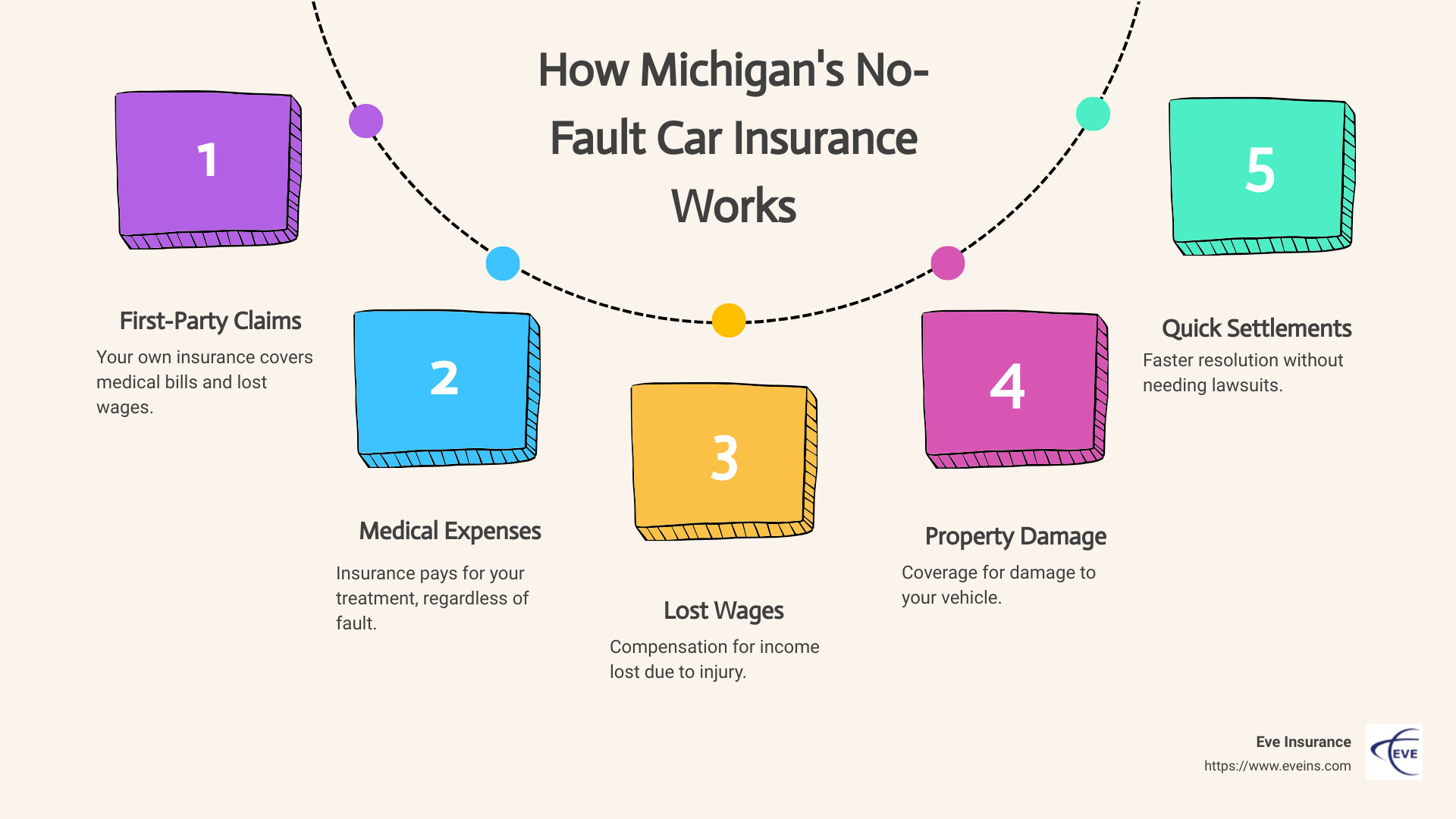
Under Michigan’s no-fault system, your insurance covers your medical expenses, lost wages, and property damage. This is known as first-party claims. Here’s a breakdown of what this means for you:
- Medical Expenses: Your insurance will cover medical treatments, surgeries, and rehabilitation costs.
- Lost Wages: If your injuries prevent you from working, your insurance will compensate you for lost income.
- Property Damage: While your insurance covers most damages, you can also file a mini-tort claim for up to $3,000 to cover vehicle damages not covered by insurance.
To receive these benefits, you must file a claim with your insurance company within one year of the accident.
Comparative Fault Rules
Michigan also follows comparative fault rules. This means if you’re partially at fault for an accident, your compensation will be reduced by your percentage of fault. For example, if you’re 20% at fault, you can only recover 80% of the damages.
- Partial Fault: If both drivers share blame, compensation is divided based on each person’s percentage of fault.
- Compensation Claims: You can still claim compensation for economic damages like medical bills and lost wages, but non-economic damages (like pain and suffering) are harder to claim unless you meet severe injury thresholds.
2024 Updates
In 2024, some updates to Michigan’s no-fault insurance law will take effect. These include adjustments to liability coverage and changes affecting out-of-state accidents.
- Liability Coverage: The minimum required liability coverage will increase, which could impact your premiums.
- Out-of-State Accidents: If you’re involved in an accident outside Michigan, the rules for filing claims and receiving benefits may differ. It’s crucial to understand these nuances to protect yourself fully.
These updates aim to balance the costs and benefits of no-fault insurance, ensuring that victims receive prompt and fair compensation while controlling insurance premiums.
Next, we’ll discuss how to file a car accident lawsuit in Michigan and what you need to know about mini-tort claims.
Filing a Car Accident Lawsuit in Michigan
Mini-Tort Claims
In Michigan, if you’re involved in a car accident and it’s not entirely your fault, you can file a mini-tort claim. This allows you to recover up to $3,000 for vehicle damage from the at-fault driver. Think of it as a way to get back some of your repair costs, even if you have to pay a deductible.
For example, let’s say you’re in an accident, and the repair bill is $4,000. If the other driver is 100% at fault, you can claim up to $3,000 from them under the mini-tort law. If your deductible is less than $3,000, you can claim the deductible amount instead.
Uninsured and Underinsured Motorist Coverage
Given that many drivers in Michigan are either uninsured or underinsured, having this coverage is crucial.
- Uninsured Motorist Coverage (UM): This protects you if you’re in an accident with a driver who doesn’t have any insurance. In cities like Detroit, where up to 50% of drivers may be uninsured, this coverage can be a lifesaver.
- Underinsured Motorist Coverage (UIM): This kicks in when the at-fault driver doesn’t have enough insurance to cover your damages. For instance, if your medical bills total $100,000 and the at-fault driver’s policy only covers $50,000, your UIM coverage can help bridge the gap.
Personal Injury and Serious Injury Claims
You can’t sue the other driver for personal injuries unless your injuries are severe. This means they must result in disfigurement, temporary or permanent disability, or fractures.
If your injuries meet this threshold, you can file a lawsuit for non-economic damages like pain and suffering. The statute of limitations for filing such a lawsuit in Michigan is three years from the date of the accident. However, this time period can be extended if the injured party is a minor or incapacitated.
Comparative Fault Rules
Michigan follows comparative fault rules, which means your compensation is reduced by your percentage of fault in the accident. For instance, if your damages are $100,000 but you’re found to be 20% at fault, you can only recover $80,000. If you’re more than 50% at fault, you can’t recover non-economic damages like pain and suffering.
Understanding these rules can help you navigate the complexities of filing a car accident lawsuit in Michigan.
Next, we’ll delve into the frequently asked questions about Michigan’s no-fault car insurance to clear up any lingering doubts you might have.
Frequently Asked Questions about Michigan No-Fault Car Insurance
Is Michigan getting rid of no-fault insurance?
No, Michigan still has no-fault car insurance. The system ensures that if you’re injured in a car accident, your own insurance company covers your medical bills and lost wages, regardless of who caused the accident. This helps speed up the process of getting financial help without needing to prove fault.
Who pays for car damage in a no-fault state in Michigan?
In Michigan, no-fault insurance primarily covers medical expenses and lost wages. However, for car damage, you may need additional coverage like collision or comprehensive insurance. If another driver is at fault, you can file a mini-tort claim to recover up to $3,000 for vehicle damage not covered by your own insurance.
When did Michigan change to a no-fault state?
Michigan switched to a no-fault insurance system in 1973. Before that, it was a tort liability state. Significant reforms were made in 2019, including new options for Personal Injury Protection (PIP) coverage and measures aimed at reducing high insurance premiums.
Conclusion
At Eve Insurance, we understand that navigating Michigan’s no-fault car insurance laws can be challenging. Our goal is to simplify this process and help Michigan drivers make informed decisions about their insurance options.
Michigan drivers now have more choices than ever when it comes to Personal Injury Protection (PIP) coverage. Whether you need unlimited coverage or more budget-friendly options, our team is here to guide you. These choices can significantly impact your financial protection and peace of mind after an accident.
We also offer expert legal advice to ensure you understand your rights and benefits under Michigan’s no-fault system. Our experienced auto accident attorneys can help you navigate the complexities of filing a claim, dealing with uninsured or underinsured motorists, and understanding the recent reforms.
For more information on how we can assist you with your auto insurance needs, visit our Auto Insurance page. If you have any questions or need personalized advice, don’t hesitate to contact us for a complimentary consultation.
Stay safe on the roads, and let Eve Insurance be your trusted partner in navigating Michigan’s no-fault car insurance landscape.