
Understanding Michigan’s Car Insurance Requirements
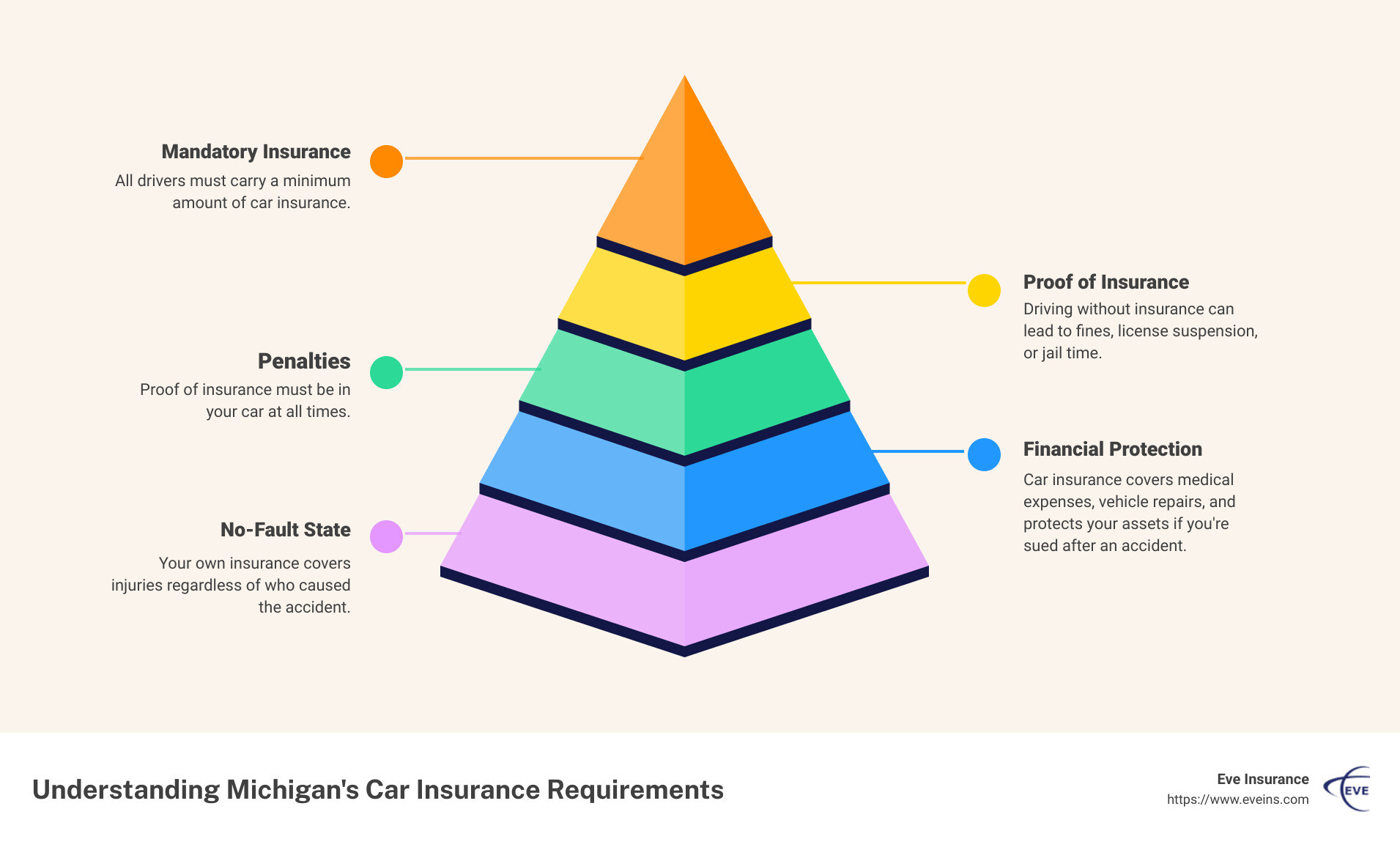
Do you have to have car insurance in Michigan? Yes, it is mandatory. Michigan’s car insurance laws are some of the strictest in the country. Here’s a quick breakdown:
- All drivers must carry a minimum amount of car insurance.
- Proof of insurance must be in your car at all times.
- Driving without insurance can lead to fines, license suspension, or jail time.
Why It’s Important: Car insurance is crucial for financial protection. It covers medical expenses, vehicle repairs, and protects your assets if you’re sued after an accident.
Michigan Laws: Michigan is a no-fault state. This means your own insurance covers injuries regardless of who caused the accident. Minimum coverages include Personal Injury Protection (PIP), Property Protection Insurance (PPI), and Bodily Injury Liability (BI).
With over 25 years in the industry, I’m Greg Eve and at Eve Insurance, we focus on helping homeowners and drivers navigate Michigan’s complex insurance landscape. Stick with us, and we’ll guide you through the ins and outs of staying compliant and protected.
Do You Have to Have Car Insurance in Michigan?
Yes, you must have car insurance in Michigan. The state laws are strict, and not having insurance can lead to severe penalties. Michigan is a no-fault state, meaning your insurance covers your injuries and damages regardless of who is at fault in an accident. Here’s what you need to know about the requirements and penalties.
Penalties for Driving Without Insurance
Driving without car insurance in Michigan is a serious offense. If you’re caught, you could face:
- Fines: Up to $500 for a first offense.
- License Suspension: Your driver’s license may be suspended for up to 30 days or until you show proof of insurance.
- Jail Time: You could spend up to one year in jail for driving without insurance.
Repeat offenders face even harsher penalties, including higher fines and longer jail sentences. According to the [Insurance Information Institute](https://www.iii.org/article/background-on-compulsory-auto-uninsured-motorists#Automobile Financial Responsibility Laws By State), penalties for subsequent offenses can be as high as $5,000.
Proof of Insurance Requirements
In Michigan, you must carry proof of insurance in your vehicle at all times. This can be a physical card or an electronic version on your smartphone. Law enforcement officers have the right to ask for this proof during traffic stops or after an accident.
If you fail to provide proof of insurance when asked, you may face:
- Immediate License Suspension: Your license could be suspended on the spot.
- Additional Fines: You may incur extra fines for not having proof of insurance.
Having proof of insurance is not just a legal requirement but also a way to protect yourself financially. Michigan’s no-fault system means your insurance will cover your costs up front, and your insurer will then deal with the other driver’s insurance company.

Stay tuned as we dive deeper into the mandatory auto insurance coverages in Michigan, including PIP, BI, and PPI, to ensure you know exactly what you need to stay compliant.
Mandatory Auto Insurance Coverages in Michigan
Michigan’s no-fault insurance system requires drivers to have three main types of coverage: Personal Injury Protection (PIP), Bodily Injury Liability (BI), and Property Protection Insurance (PPI). Let’s break these down.
Personal Injury Protection (PIP)
Personal Injury Protection (PIP) is crucial in Michigan. It covers your medical expenses and lost wages if you’re injured in a car accident, regardless of who caused the accident.
- Medical Expenses: PIP covers all necessary medical treatments related to the accident. This can include surgeries, hospital stays, and rehabilitation.
- Lost Wages: If you can’t work due to your injuries, PIP will cover a portion of your lost income. This helps ensure you can still pay your bills while recovering.
- Attendant Care: If you need in-home nursing services, PIP can cover these costs. It also includes replacement services for tasks you can’t do yourself, like house cleaning.
PIP coverage is essential because it ensures you get prompt medical care and financial support without waiting for a lengthy legal process.
Bodily Injury Liability (BI)
Bodily Injury Liability (BI) coverage protects you if you’re at fault in an accident that injures someone else.
- Coverage Limits: Michigan law requires a minimum of $250,000 per person and $500,000 per accident. However, you can opt for lower limits of $50,000 and $100,000, though this isn’t recommended. Higher limits offer better protection against lawsuits.
- At-Fault Accidents: If you’re found at fault, your BI coverage helps pay for the injured party’s medical expenses, pain and suffering, and lost wages. This can prevent you from facing significant out-of-pocket costs.
- Legal Liability: BI coverage also helps with legal fees if the injured party sues you. Given the high costs of legal battles, adequate BI coverage is a smart choice.
Property Protection Insurance (PPI)
Property Protection Insurance (PPI) is unique to Michigan. It covers damages you cause to other people’s property within the state.
- Tangible Property: PPI covers damage to parked cars, buildings, fences, and other fixed objects. For instance, if you accidentally crash into someone’s fence, PPI will cover the repair costs.
- Coverage Limits: Michigan mandates $1 million in PPI coverage. This high limit ensures that most property damage claims can be settled without financial strain on you.
- Fixed Objects: PPI is particularly useful for accidents involving stationary objects. Whether it’s a mailbox or a storefront, PPI ensures the damages are covered.
Having these coverages not only keeps you compliant with Michigan law but also provides comprehensive financial protection. Next, we’ll explore optional coverages that can further enhance your auto insurance policy.
Optional Auto Insurance Coverages in Michigan
While Michigan mandates certain coverages, adding optional coverages can give you extra protection and peace of mind. Here are three key optional coverages to consider:
Comprehensive Coverage
Comprehensive coverage protects your vehicle from non-collision incidents. This means it covers damages from events like theft, vandalism, or weather-related damage.
- Non-Collision Incidents: Comprehensive coverage steps in when your car is damaged by something other than a collision. This includes events like a tree falling on your car or damage from a hailstorm.
- Theft: If your car is stolen, comprehensive coverage will help cover the loss. Given that vehicle thefts are not uncommon, this is a valuable addition.
- Weather Damage: Michigan weather can be unpredictable. Comprehensive coverage protects you from damages caused by severe weather conditions such as floods, windstorms, and hail.
Comprehensive coverage usually comes with a deductible, which is the amount you pay out of pocket before your insurance kicks in. You can choose a higher deductible to lower your premium, but make sure it’s an amount you can afford.
Collision Coverage
Collision coverage pays for repairs to your vehicle if it’s damaged in an accident. This includes collisions with other vehicles or stationary objects like guardrails and trees.
- Accident Repairs: Whether you hit another car or a lamppost, collision coverage will cover the repair costs. This can be crucial for getting back on the road quickly.
- Deductible: Like comprehensive coverage, collision coverage also comes with a deductible. You’ll need to pay this amount before your insurance covers the rest. Choose a deductible that balances your monthly premium and out-of-pocket costs.
- Vehicle Damage: Collision coverage ensures that your car is repaired or replaced, regardless of who is at fault. This can save you significant out-of-pocket expenses.
Uninsured/Underinsured Motorist Coverage
Uninsured and underinsured motorist coverage protects you if you’re in an accident with a driver who doesn’t have adequate insurance.
- Uninsured Drivers: If you’re hit by a driver who doesn’t have insurance, this coverage will help pay for your medical expenses and vehicle repairs. According to a 2023 study, about 19.6% of Michigan drivers are uninsured, making this coverage especially important.
- Underinsured Drivers: Sometimes, the at-fault driver’s insurance isn’t enough to cover all your expenses. Underinsured motorist coverage fills in the gap, ensuring you’re not left paying out of pocket.
- Accident Coverage: This coverage is also beneficial if you’re involved in a hit-and-run accident. It ensures you’re covered for your injuries and vehicle damage, even if the other driver can’t be identified.
Adding these optional coverages can significantly enhance your protection and ensure you’re prepared for a variety of situations. Next, we’ll answer some frequently asked questions about Michigan car insurance.
Frequently Asked Questions about Michigan Car Insurance
What Happens If You Don’t Have Car Insurance in Michigan?
Driving without car insurance in Michigan is a serious offense. If you’re caught without insurance, you could face:
- Misdemeanor Charges: Driving without insurance is a misdemeanor in Michigan. This can lead to a criminal record.
- Fines: You could be fined up to $500.
- Jail Time: You might face up to one year in jail.
- License Suspension: Your driver’s license could be suspended for up to 30 days or until you provide proof of insurance.
Not having insurance can result in severe penalties, so it’s crucial to comply with the state’s requirements.
Why is Michigan a No-Fault State?
Michigan operates under a no-fault insurance system. This means that after an accident, each driver’s insurance pays for their own medical expenses, regardless of who was at fault. The goal is to reduce the financial burden and speed up victim compensation.
- Tort Liability System: Before no-fault, Michigan used a tort liability system where the at-fault driver paid for damages. This often led to lengthy legal battles and delayed compensation.
- Victim Compensation: The no-fault system ensures that victims get quick and fair compensation for their injuries and losses.
- Financial Burdens: By reducing the need for lawsuits, the no-fault system aims to lower overall insurance costs and financial stress on drivers.
How Much Car Insurance Do I Need in Michigan?
In Michigan, you’re required to carry certain minimum amounts of car insurance. However, the state also has default higher limits that offer more protection.
- Minimum Requirements: At the very least, you need 50/100/10 liability insurance, which includes:
- $50,000 in bodily injury liability per person per accident
- $100,000 total bodily injury liability per accident
- $10,000 in property damage liability per accident
- Recommended Coverage: The state’s default is 250/500/10, which provides more robust coverage:
- $250,000 in bodily injury liability per person per accident
- $500,000 total bodily injury liability per accident
- $10,000 in property damage liability per accident
- Cost Considerations: While higher coverage limits cost more, they offer greater financial protection. If you can afford it, insurance experts recommend opting for higher limits to cover you in serious accidents.
Understanding these requirements and recommendations will help you make informed decisions about your car insurance in Michigan.
Conclusion
In summary, car insurance in Michigan is not just a good idea—it’s the law. As a no-fault state, Michigan requires drivers to carry specific types of insurance to cover medical expenses, property damage, and liability. Failing to meet these requirements can result in severe penalties, including fines, license suspension, and even jail time.
Complying with Michigan’s car insurance laws isn’t just about avoiding penalties; it’s about protecting yourself and others on the road. Adequate car insurance ensures that you have the financial support needed in case of an accident, covering medical expenses, property damage, and more.
If you’re unsure about your current coverage or need to find a policy that fits your needs and budget, consider reaching out to Eve Insurance. Based in Flint Township, MI, we offer personalized insurance solutions for both personal and business needs. Our team is dedicated to helping you navigate Michigan’s complex car insurance landscape, ensuring you have the right coverage to stay compliant and protected.
Feel free to contact us for a consultation or visit our website for more information. Stay safe and drive responsibly!